
Loft Conversions in Surrey & Elmbridge
- 30 years experience
- 10-year structural guarantee
- Fixed fee quotation
- 5% Scheduling discount
- 500+ Successful projects
Turn unused roof space into a bright new bedroom, office or suite with a carefully managed loft conversion from one accountable design and build team.
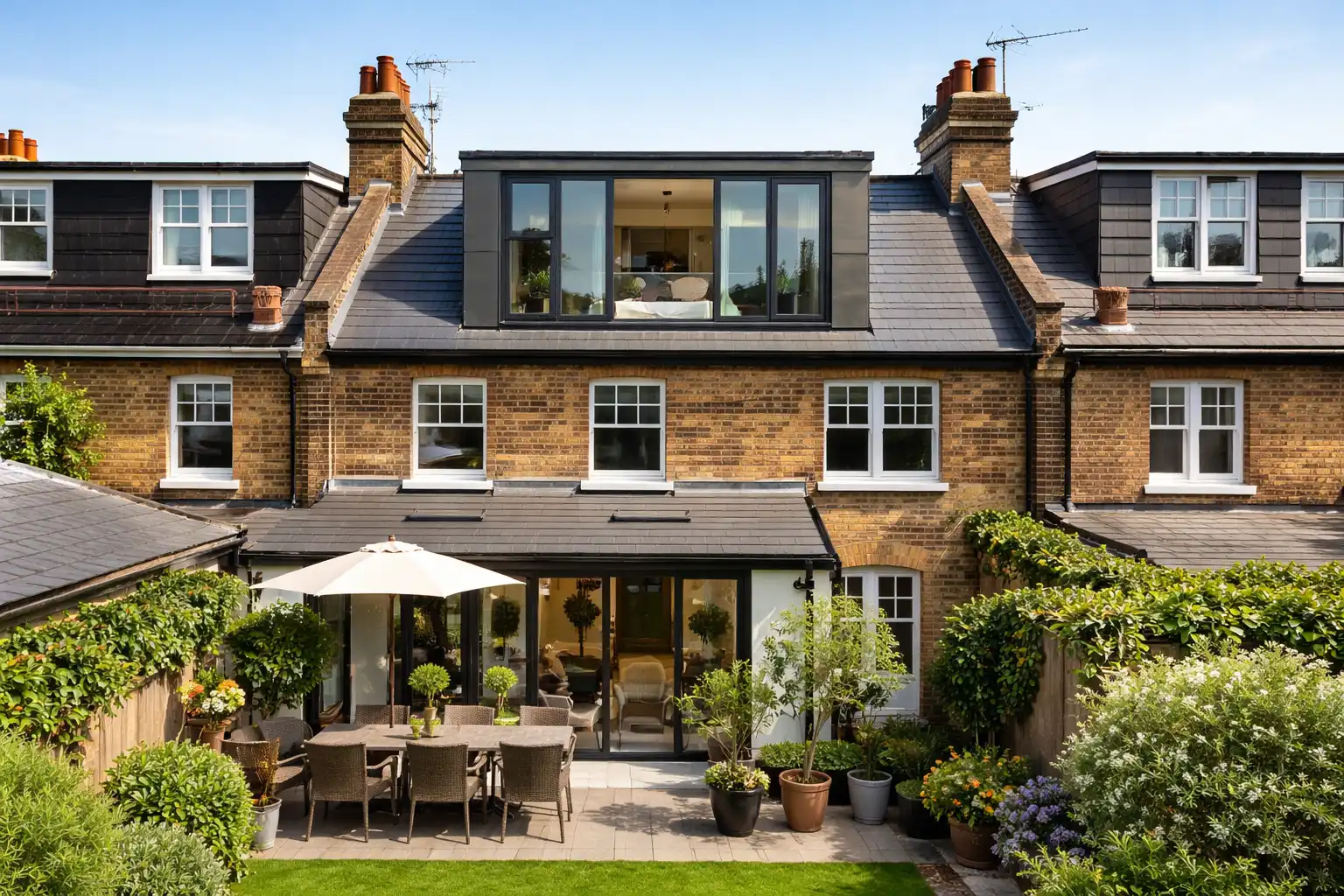
Loft conversion builders for Surrey family homes
A well-designed loft conversion is one of the most practical ways to add living space without losing garden area. For many homes in Elmbridge, East Molesey, Esher, Kingston upon Thames, Surbiton and nearby Surrey towns, the roof space can become a calm bedroom, home office, guest room, dressing area or master suite.
HWP Design & Build delivers dormer loft conversions, hip-to-gable loft conversions, mansard loft conversions and Velux rooflight conversions. We help you choose the right route for your roof shape, head height, budget, planning position and long-term use of the room.
Loft projects need more than attractive finishes. They need sound structure, compliant stairs, insulation, ventilation, fire safety, careful sequencing and clear documentation. We manage Building Regulations, site coordination and finish quality as part of a complete service. If you are ready to explore the potential above your existing ceiling, request a fixed-price quotation or view our recent projects.
.webp)
.webp)
Loft conversions in Surrey:
HWP Design & Build provides dormer, hip-to-gable, mansard, L-shaped dormer and Velux rooflight loft conversions across Surrey, Elmbridge and nearby South West London. We assess roof height, structure, stairs, planning, Building Regulations and fire safety before preparing a fixed-price quotation.
Common loft conversion types
Different roof types suit different conversion strategies. We will explain the practical trade-offs clearly so you can balance space, budget, appearance, planning risk and disruption.
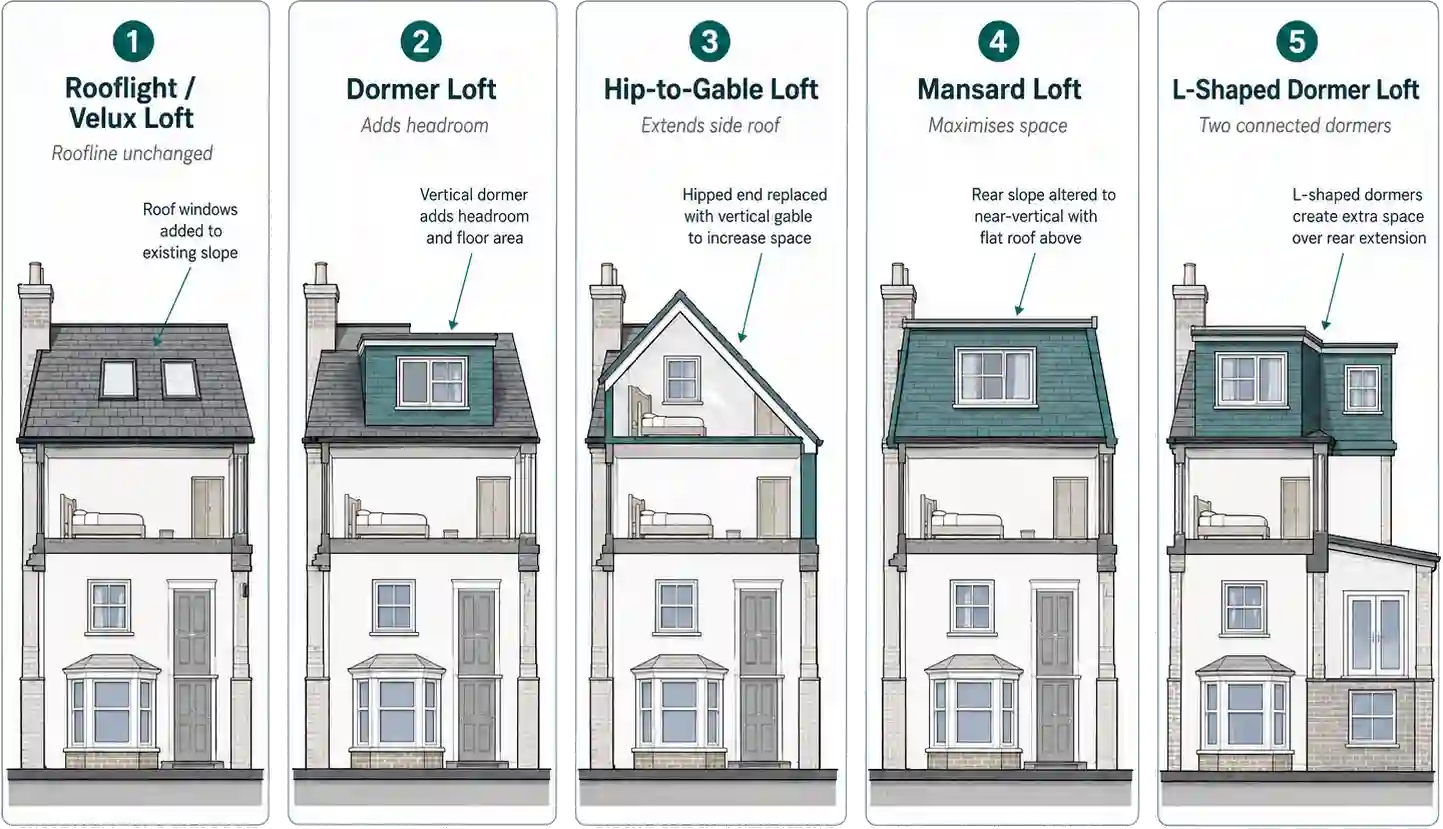
Which loft conversion is right for my Surrey home?
The right loft conversion depends on your roof shape, ridge height, property type, planning constraints and how you want to use the space. A Velux rooflight conversion may suit a loft with generous existing height, while a dormer or L-shaped dormer can create more usable floor area. Hip-to-gable conversions are often suitable for hipped semi-detached or detached homes, and mansard conversions can be effective where maximum space is the priority.
During the survey stage, we explain which options are realistic for your property and which route offers the best balance of space, cost, planning risk and long-term value.
| Conversion type | Best suited to | Typical benefit |
|---|---|---|
| 1 Velux rooflight conversion | Lofts with good existing head height and a simpler brief. | A lighter-touch option that keeps the roof shape largely intact. |
| 2 Dormer loft conversion | Homes needing more headroom and usable floor area. | A practical balance of space, value and design flexibility. |
| 3 Hip-to-gable loft conversion | Semi-detached and detached homes with a hipped roof. | Extends the roof form to create a more usable loft footprint. |
| 4 Mansard loft conversion | Period homes and properties where maximum space is the priority. | Major volume gain and strong layout potential, often subject to planning. |
| 5 L-shaped dormer loft conversion | Victorian and Edwardian terraced or semi-detached homes with a rear outrigger or existing L-shaped roof form. | Creates a larger loft footprint with strong potential for a main bedroom, en-suite, dressing area or flexible home office space. |
How much does a loft conversion cost in Surrey?
Loft conversion cost varies significantly because no two homes, roof structures or specifications are the same. A basic rooflight conversion with no major roof enlargement is very different from a dormer, hip-to-gable or mansard conversion with a new bedroom, bathroom, steelwork, upgraded fire protection and high-end finishes.
Rather than publish a misleading headline price, we provide fixed-price clarity after reviewing the property, the structure, the drawings, the approvals route and the level of finish required. This helps avoid the common problem of comparing quotations that include different assumptions.
| Cost factor | Why it affects the quotation |
|---|---|
| Conversion type | Rooflight conversions are usually simpler, while dormer, hip-to-gable, mansard and L-shaped dormer conversions involve more structural and roof alteration work. |
| Existing roof structure | Traditional cut roofs and modern trussed roofs require different structural approaches and strengthening. |
| Staircase position | The stairs must be safe, compliant and practical without damaging the layout of the floor below. |
| Bathrooms and drainage | En-suites add plumbing, drainage, ventilation, waterproofing, finishes and coordination requirements. |
| Fire safety upgrades | Loft conversions often require protected escape routes, fire-resisting doors and interlinked alarms. |
| Finish specification | Flooring, joinery, glazing, storage, lighting, heating and bathroom choices can significantly affect the final price. |
Local knowledge matters because loft conversions around Elmbridge, East Molesey, Surbiton, Thames Ditton, Esher and Kingston often involve established housing stock, tight access, neighbouring properties, party wall considerations and roof forms that need careful feasibility checks before work begins.
The most expensive parts of a loft conversion are usually the structural work, roof alterations, dormers or mansards, staircase changes, bathrooms, fire safety upgrades and finish specification. For a deeper planning and cost overview, read our Elmbridge loft conversion costs, planning and timeline guide.
What happens after you request a loft conversion quotation?
We review your enquiry, arrange a suitable time to discuss the property, then assess roof space, access, structure, planning route, Building Regulations and the level of finish required before preparing a clear scope.
Start your loft conversion enquiryHow we deliver your loft conversion
We start with a survey and feasibility check, then confirm the best route for layout, structure, stairs, permissions and build sequencing. Our aim is to give you a clear, buildable scope before work begins.
Loft conversions across Elmbridge, Surrey and South West London
We are based near the Surrey and London border and regularly support homeowners planning loft conversions, extensions and full home improvements across the local area.
Key locations include East Molesey, West Molesey, Hampton Court, Thames Ditton, Esher, Claygate, Walton-on-Thames, Weybridge, Kingston upon Thames, Surbiton, Teddington, Twickenham, Richmond, Wimbledon and nearby South West London.
Recent loft conversion projects
Explore examples of loft conversion and refurbishment work to see how different roof types, property styles and layouts can be approached.
Loft Conversion FAQs for Surrey & Elmbridge Homeowners
The cost depends on the roof structure, conversion type, staircase position, bathroom requirements, insulation, fire safety upgrades, specification and access. We start with a survey and clear scope so your quotation is based on the property and the finish you want, rather than a generic estimate.
A compliant habitable loft conversion is unlikely to be achievable for 10k. That level of budget is usually closer to basic storage improvements, not a fully approved bedroom, office or bathroom conversion with structure, stairs, insulation and fire safety works.
A very simple rooflight-style conversion may sometimes be closer to this level, but most Surrey dormer, hip-to-gable, mansard or bedroom-and-bathroom loft conversions require a higher budget. A site survey is the safest way to understand what is realistic.
Many house loft conversions can fall under permitted development, but this depends on roof volume, property type, previous alterations, conservation constraints and whether permitted development rights still apply. We advise on the best route and can coordinate planning applications where needed.
Yes. A loft converted into liveable accommodation will normally need Building Regulations approval for structure, fire safety, stairs, insulation, ventilation, electrics and sound separation.
Common issues include poor head height, awkward stairs, underestimated structural work, weak insulation, inadequate ventilation, fire safety oversights, drainage complications for bathrooms and unclear specifications. We address these early during survey, design and quotation.
The biggest cost drivers are usually structural steelwork, roof alterations, dormers or mansards, staircase changes, bathrooms, fire safety upgrades and the internal finish specification.
Yes, many loft conversions can be completed during winter with careful sequencing, weather protection and planning. We aim to keep the property safe, secure and weather-tight throughout the build.
Dormer and mansard conversions usually create the most usable floor area, while hip-to-gable conversions can work well for suitable semi-detached and detached homes. Rooflight conversions are often less disruptive but usually add less headroom.
You may need Party Wall notices if the work affects a shared wall, involves structural steel bearing into a party wall, or includes certain works close to adjoining property. We can advise on party wall support as part of the project planning stage.
Often yes. Many homeowners remain in the property while work is carried out. We plan access, protection, sequencing and communication to reduce disruption as much as possible.
Yes. We complete snagging and provide aftercare support to protect the finish and performance of your completed loft conversion.
Hip-to-gable and dormer loft conversions are often strong options for semi-detached homes, depending on the roof shape, ridge height, planning position and desired layout.
An L-shaped dormer uses two connected dormers, often over the main roof and rear outrigger, to create a larger loft footprint. It is commonly suited to Victorian and Edwardian terraced or semi-detached homes.
For many homeowners, a loft conversion can be more practical than moving because it adds usable space without estate agent fees, stamp duty, removals and the disruption of relocating. The right answer depends on your property, budget and long-term plans.
The timeline depends on the conversion type, structural work, weather, access, specification and whether planning permission or party wall matters are required. A simple rooflight conversion is usually quicker than a dormer, hip-to-gable, mansard or L-shaped dormer conversion. We confirm the expected programme once the survey, design and scope are agreed.
Dormer, hip-to-gable, mansard and Velux loft conversions.
Ready to price your loft conversion?
Whether you are planning a new bedroom, home office, en-suite or full master suite, we can assess your property, explain the best conversion type and provide fixed-price clarity before work begins.
Loft conversions across East Molesey, Elmbridge, Surrey and nearby South West London.
Related loft conversion services
Planning a loft conversion? These related services help with approvals, structure, project coordination and wider home improvement work.