Types of house extensions: which route is right for your home? Choosing the right extension type is the first big decision in a home improvement project. A rear extension may open the kitchen to the garden, a side return may solve a narrow layout, a wrap-around may transform the whole ground floor, and a double-storey extension may add bedrooms as well as living space. This guide compares the main types of house extensions for homes across Surrey, Elmbridge and South West London so you can start with the option that best matches your property, budget and long-term plans.
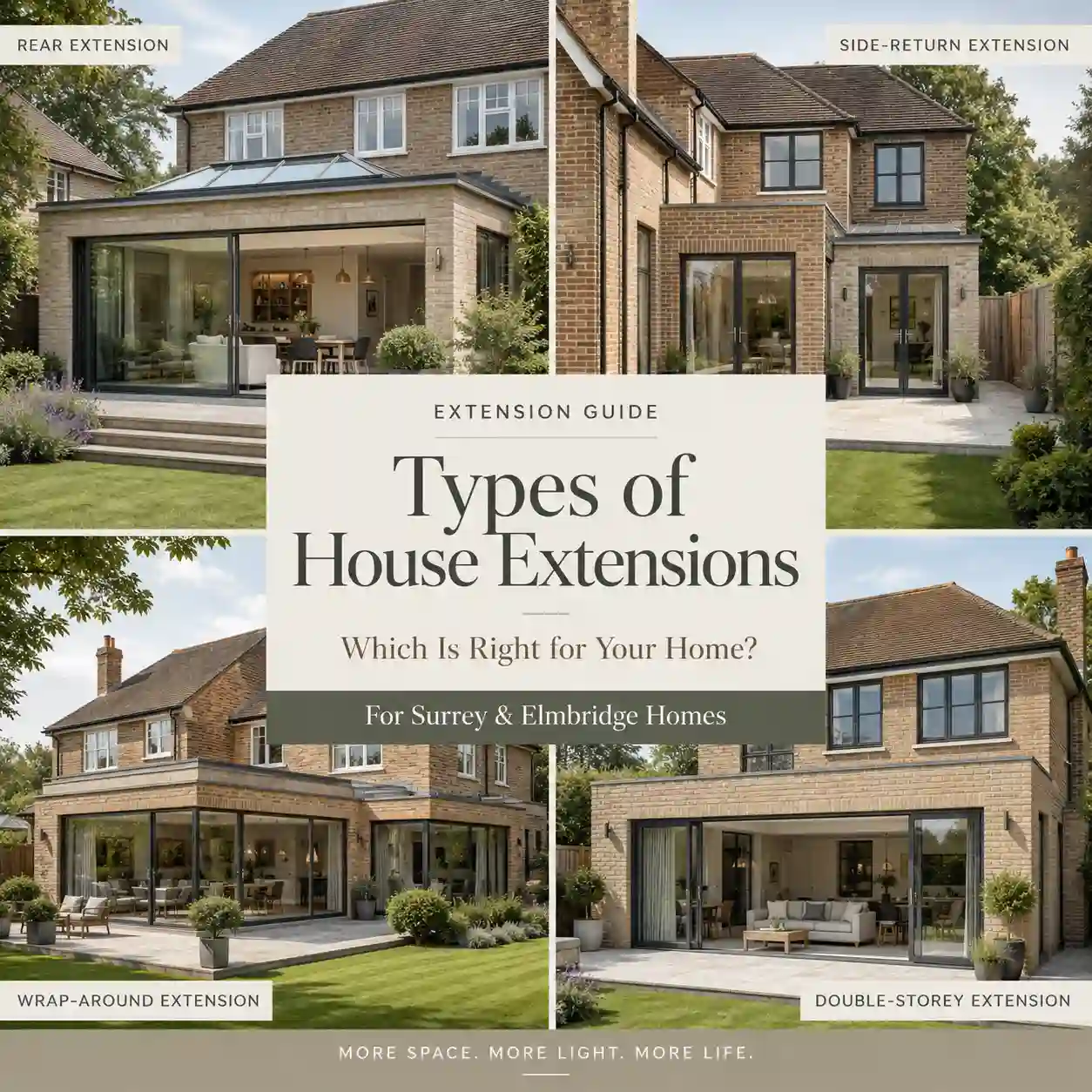
Extension types compared
Most homeowners begin with a lifestyle problem: not enough kitchen space, no home office, a dark dining room, too few bedrooms, poor storage or a layout that no longer suits family life. The extension type should be chosen around that problem, not just around what looks good online.
| Extension type | Best suited to | Typical benefit |
|---|---|---|
| Single-storey extension | Homes needing more ground-floor living, kitchen or dining space. | Improves everyday flow, daylight and garden connection. |
| Rear extension | Homes with enough garden depth behind the existing house. | Opens up the back of the home for kitchen, dining and family living. |
| Side return extension | Terraced, Victorian, Edwardian and semi-detached homes with unused side space. | Adds width and light where the ground floor feels narrow. |
| Wrap-around extension | Homes where rear and side space can be combined. | Creates a major ground-floor transformation. |
| Double-storey extension | Homes needing bedrooms or bathrooms as well as downstairs space. | Improves both living accommodation and bedroom capacity. |
| Kitchen extension | Families wanting a bigger kitchen-diner and social living area. | Creates the central everyday space many buyers and families want. |
| Garage conversion | Homes with an underused garage and sufficient parking elsewhere. | Adds usable space with fewer external changes than a new extension. |
Rear extensions
A rear extension is often the most straightforward way to create a larger kitchen, dining or family area. It works well where there is enough garden depth and the existing rear rooms are small, dark or disconnected from the outside.
The main design decisions usually include depth, roof shape, glazing, structural opening size, drainage, kitchen position and how the new space links with the older rooms.
Side return and wrap-around extensions
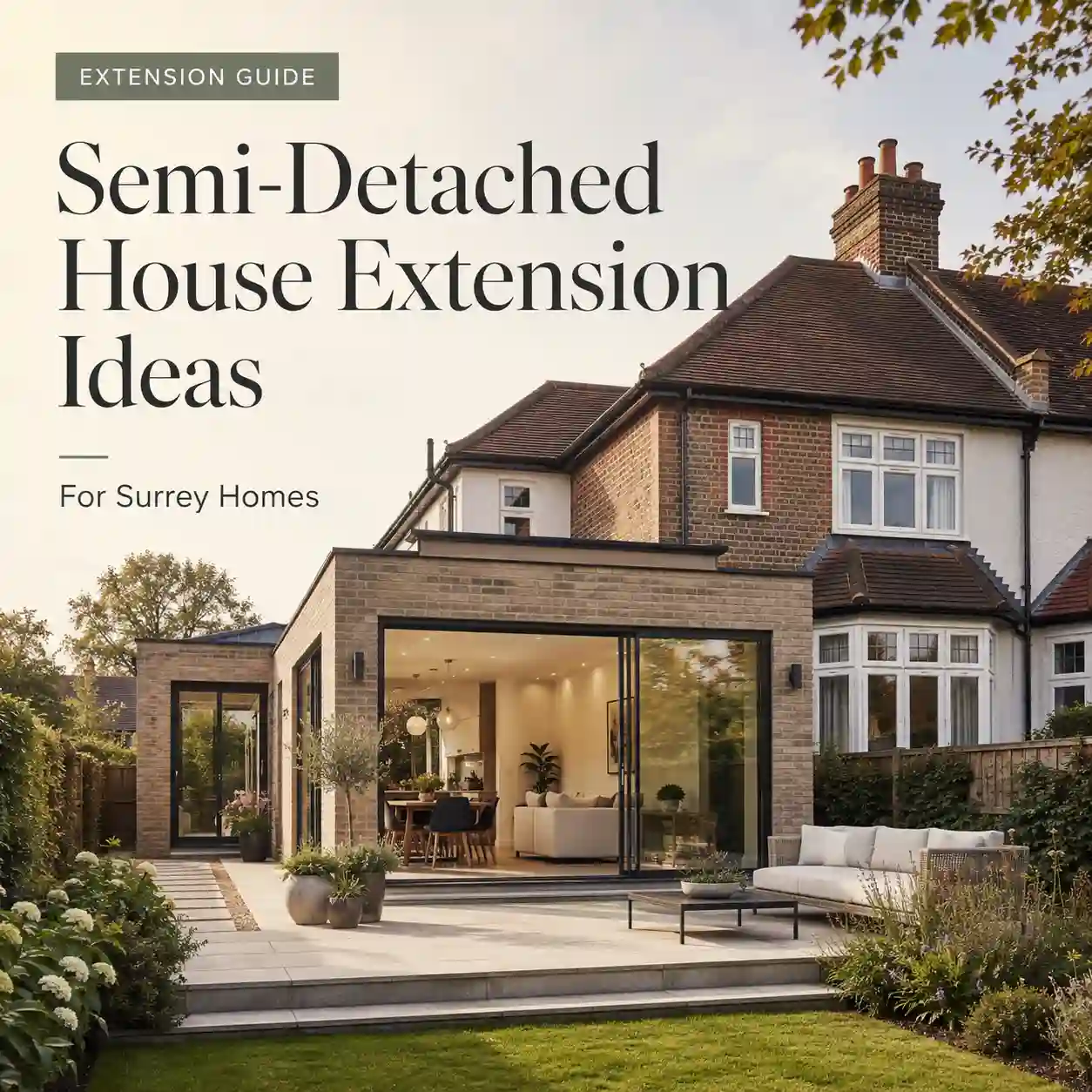
A side return extension uses narrow external space to widen the ground floor. It can be particularly effective for period and terrace-style homes around Surbiton, Kingston, Wandsworth and parts of East Molesey where the original kitchen sits in a narrow rear projection.
A wrap-around extension combines side and rear space, creating a larger transformation. It can deliver a generous kitchen-living space, but planning, structure, drainage and neighbour matters usually need more detailed review.
Single-storey vs double-storey extensions
A single-storey extension is ideal where the main problem is downstairs living space. A double-storey extension may be more appropriate where the household also needs bedrooms, a family bathroom or a larger principal suite.
A double-storey extension can make efficient use of foundations and roof work, but it is often more sensitive in planning terms because it has greater impact on neighbouring properties, daylight, privacy and external appearance.
Local considerations in Surrey and Elmbridge
Homes around East Molesey, Elmbridge, Esher, Thames Ditton, Walton-on-Thames and Weybridge vary widely. Some have tight access and shared boundaries; others have larger plots but higher specification expectations. In South West London areas such as Surbiton, Kingston and Wandsworth, party wall and neighbour considerations can be especially important.
HWP can review planning permission, Building Regulations, party wall support and build sequencing as part of a joined-up extension plan.
Frequently asked questions
Rear and kitchen extensions are often popular because they improve the main everyday living space, but the best option depends on the property and family needs.
A side return extension can be very effective where a home has unused side space and a narrow kitchen, especially in period or terrace-style properties.
A double-storey extension can be efficient where bedrooms and bathrooms are needed as well as downstairs space, but planning and neighbour impact need careful review.
Yes. HWP provides house extension design and build services across Surrey, Elmbridge and South West London.