Flat roof vs pitched roof extension: which is better? The roof shape of an extension affects much more than appearance. It influences cost, planning, internal height, rooflights, insulation, drainage, long-term maintenance and how well the new space connects with the original house. For homeowners planning a single-storey extension, rear extension or kitchen extension in Surrey and Elmbridge, the choice between a flat roof and pitched roof should be made early because it affects structure, glazing, specification and budget.
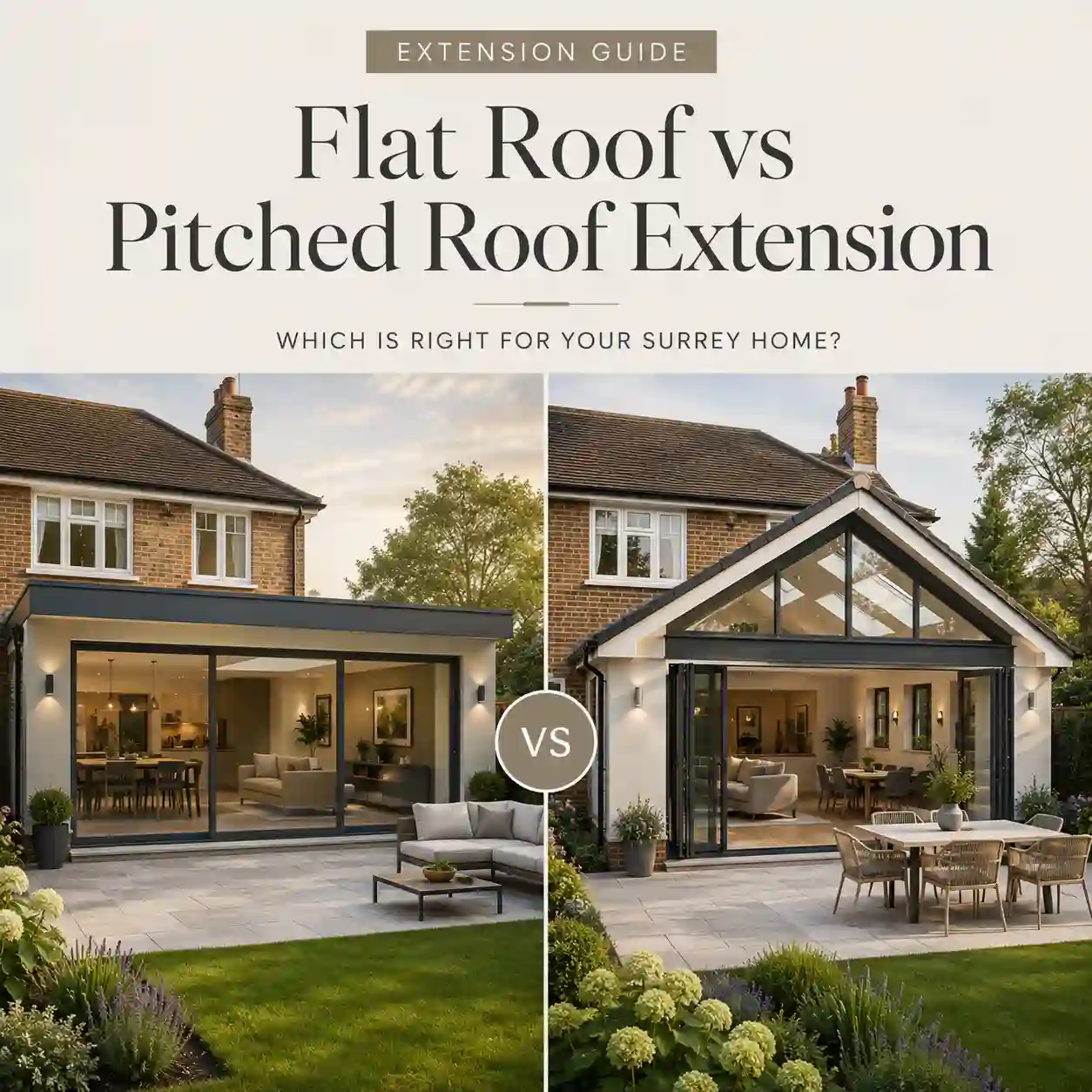
The simple difference
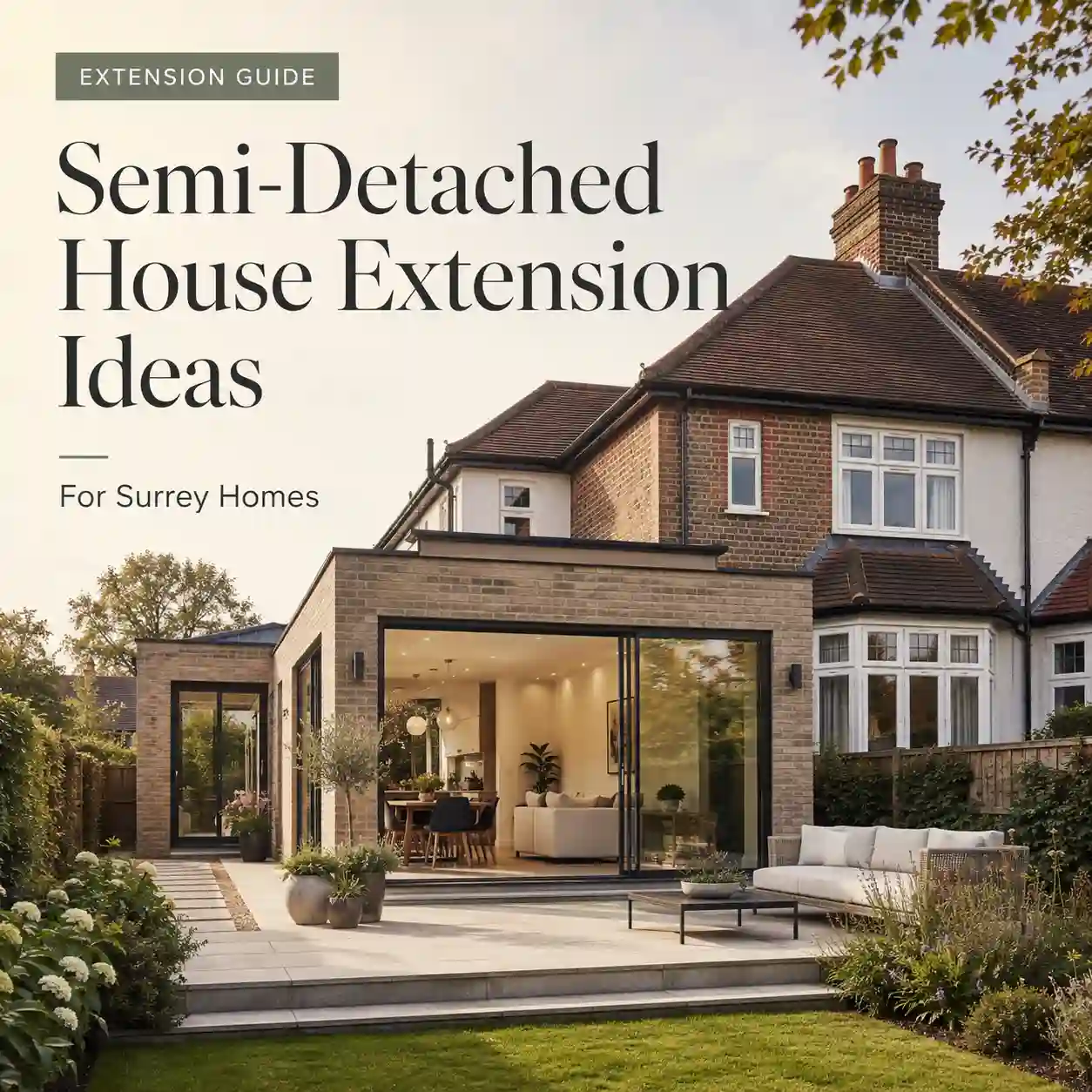
A flat roof extension usually has a shallow fall hidden behind a parapet or finished edge. It often suits contemporary kitchen-diners, rooflights and clean rear elevations. A pitched roof extension has a sloping roof that may use tiles or slates to relate more closely to the existing property.
Neither option is automatically better. The right roof depends on the home, extension type, planning position, desired light, budget and how visible the extension will be from neighbouring properties or the street.
Flat roof and pitched roof extensions compared
The comparison below is a practical starting point for Surrey homeowners.
| Factor | Flat roof extension | Pitched roof extension |
|---|---|---|
| Design style | Often contemporary, clean and well suited to large rear glazing. | Often more traditional and can blend with existing tiled roofs. |
| Natural light | Works well with rooflights or lanterns. | Can use rooflights, gables or vaulted ceilings depending on design. |
| Internal feel | Can create a crisp modern kitchen-living space. | Can add height and character, especially with a vaulted ceiling. |
| Cost and complexity | Can be efficient, but detailing, insulation and drainage must be good. | May cost more depending on roof form, tiles, structure and junctions. |
| Planning impact | Often lower profile, but parapets and materials still matter. | Can be more visually prominent but may suit traditional homes better. |
| Maintenance | Depends heavily on membrane, falls, outlets and workmanship. | Depends on tiles, valleys, gutters and roof junctions. |
Rooflights, lanterns and daylight strategy
Roof glazing can transform a kitchen extension, but it should be used carefully. Too little daylight can leave the middle of the house gloomy; too much poorly planned glazing can create glare, overheating and heat-loss concerns.
HWP considers roof glazing alongside structure, insulation, ventilation, electrics and Building Regulations so the design works in everyday use.
Local planning and neighbour considerations
In East Molesey, Elmbridge, Thames Ditton, Surbiton and Wandsworth, extension roofs can affect neighbour outlook, boundary height, conservation sensitivity and the relationship with older properties. Roof shape should therefore be checked as part of the planning permission route, even where the project may be permitted development.
Flat roofs are not always easier in planning terms, and pitched roofs are not always more acceptable. The design has to respond to the property and surrounding context.
Frequently asked questions
Often it can be more cost-efficient, but this depends on size, specification, rooflights, waterproofing, insulation and detailing. A poorly specified flat roof is not a good saving.
A well-designed and properly installed flat roof with suitable falls, waterproofing and maintenance can perform well. Quality of detailing is critical.
Not automatically. A pitched roof may suit some homes better visually, but the planning position depends on scale, height, materials, neighbour impact and local context.
Yes. HWP can advise on roof options as part of single-storey, rear, side return and kitchen extension projects.