
House Extension Types & Costs in Surrey & Elmbridge
- 30 years experience
- 10-year structural guarantee
- Fixed fee quotation
- 5% Scheduling discount
- 500+ Successful projects
Compare the most popular house extension types, guide cost bands, planning complexity and buildability considerations before choosing the right route for your home.
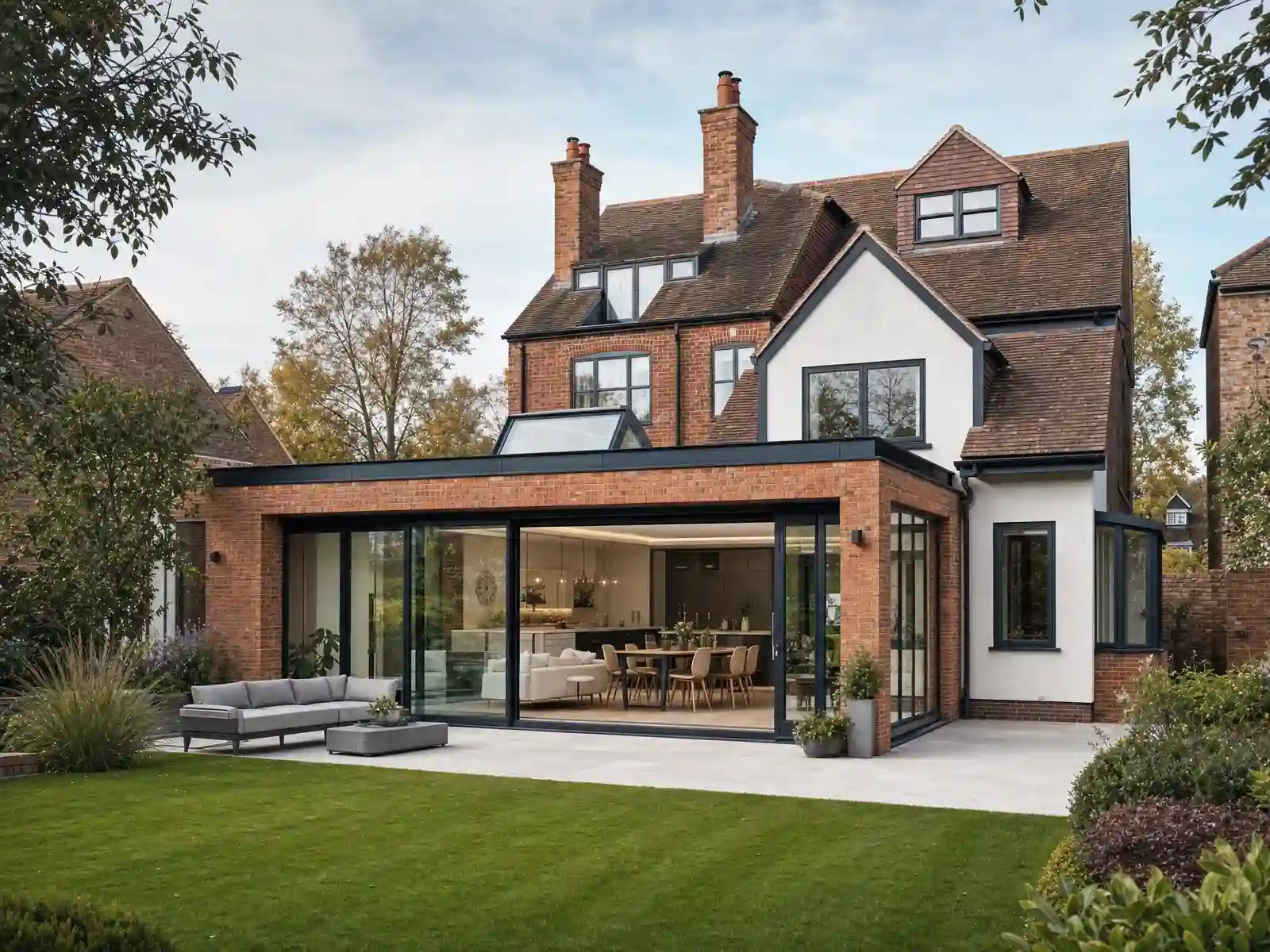
House extension options, costs and buildability advice for local homes
Choosing the right extension type is one of the most important early cost decisions in a home improvement project. A rear extension may be ideal for a larger kitchen and better garden connection, while a side return can unlock wasted side space. A wrap-around extension can transform the whole ground floor, and a double-storey extension can add bedrooms or bathrooms as well as living space, but each route carries a different budget profile.
HWP Design & Build helps homeowners across East Molesey, Elmbridge, Esher, Thames Ditton, Walton-on-Thames, Weybridge, Kingston upon Thames, Surbiton and nearby South West London compare the practical, planning and cost implications of each route.
This page is designed as a guide to extension types, associated cost bands and likely budget drivers. For a more personalised early estimate, use our house extension cost calculator or request a fixed-price quotation once the scope, drawings, specification and site conditions are clearer.
Clear advice before you commit to a design route
HWP Design & Build is the trading name of SMA Design & Build Ltd. We combine over 30 years of hands-on industry experience with practical design thinking, insured delivery, tidy site management, quality finishing and aftercare support.
Learn more about our process, accreditations, insurance and guarantees, aftercare and customer reviews.
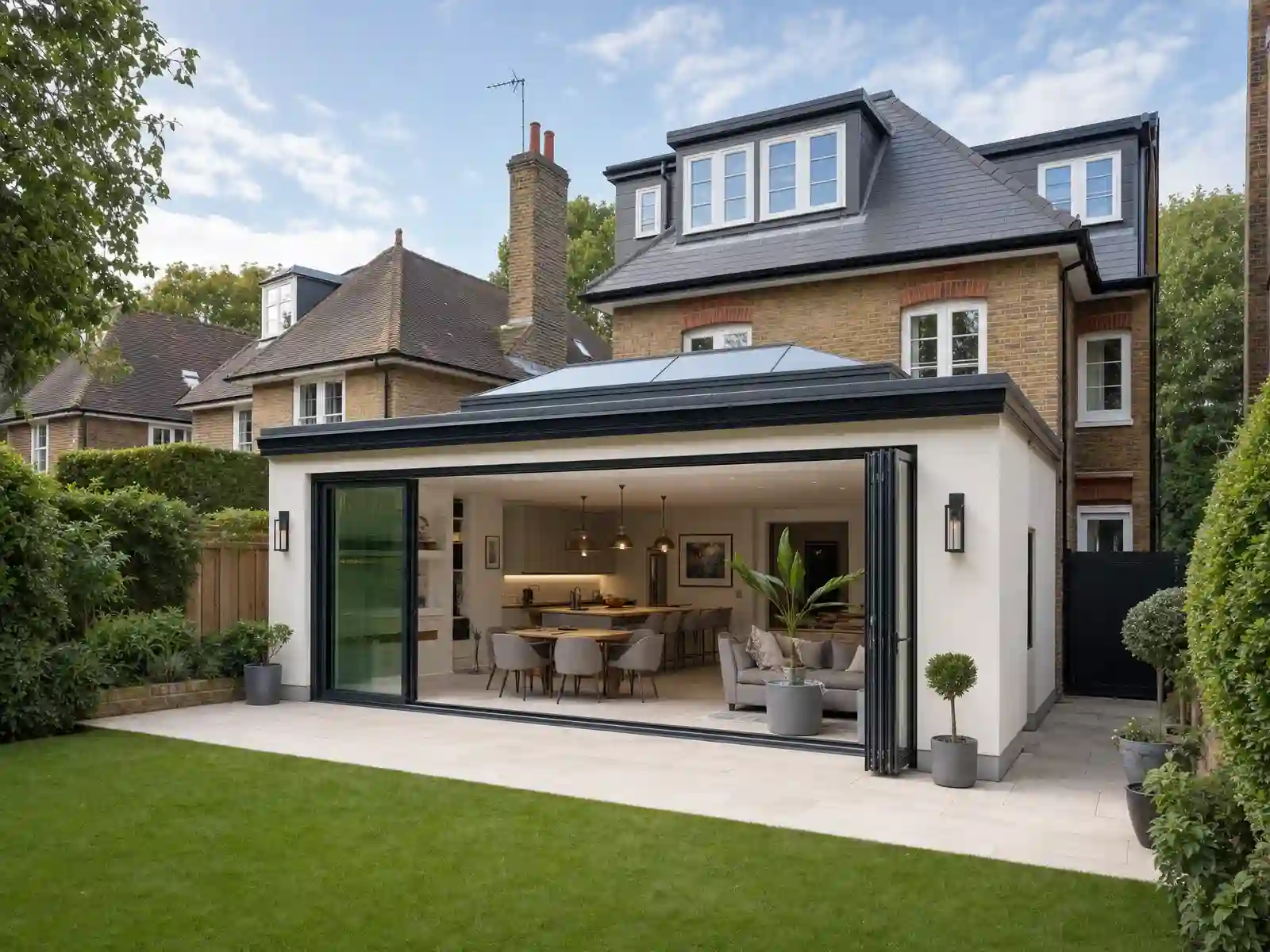
House extension types and costs in Surrey & Elmbridge:
HWP Design & Build compares extension options by space gained, guide cost range, planning risk, structural complexity, likely disruption and specification level. We then help you move from early ideas into a practical design, compliant specification and fixed-price quotation for your property.
Indicative house extension cost bands in Surrey & Elmbridge
The guide ranges below are designed for early comparison only. They are not fixed prices and should not replace a site-specific quotation. In Elmbridge, Surrey and nearby South West London, costs can move quickly depending on access, foundations, drainage, structural openings, glazing, kitchen specification, bathrooms, finishes, professional input, Building Regulations, party wall matters and VAT.
HWP uses these figures as a starting point for discussion before narrowing the budget through survey, drawings, specification and a clear scope of works.
| Extension type | Guide project budget | Usually includes / depends on | Next step |
|---|---|---|---|
| Garage conversion | From around £18,000–£45,000+ | Existing structure, insulation, damp protection, floor build-up, heating, electrics, glazing and whether a utility, shower room or major opening is needed. | Check the garage condition, floor level, parking impact and Building Regulations route. |
| Rear extension | From around £60,000–£140,000+ | Footprint, foundations, structural opening, roof design, glazing, drainage, kitchen relationship, flooring and garden access. | Use the calculator, then review the likely footprint and planning route. |
| Side return extension | From around £60,000–£130,000+ | Steelwork, party wall matters, drainage runs, rooflights, restricted access, kitchen width and internal reconfiguration. | Review neighbour boundaries, drainage and whether the side space delivers enough usable gain. |
| Single-storey extension | From around £65,000–£150,000+ | Overall footprint, roof form, glazing package, open-plan structure, insulation, heating, electrics and finish specification. | Decide whether the priority is kitchen space, living space, utility space or garden connection. |
| Kitchen extension | From around £80,000–£180,000+ | Core extension works plus kitchen units, worktops, appliances, lighting, underfloor heating, flooring, utility space and glazing. | Separate construction costs from kitchen and finish allowances before committing to a budget. |
| Wrap-around extension | From around £110,000–£240,000+ | Side and rear structure, multiple steel zones, roof integration, drainage, major layout changes, kitchen specification and glazing. | Prepare coordinated design and structural thinking early because this route has more moving parts. |
| Double-storey extension | From around £130,000–£280,000+ | Foundations, scaffolding, first-floor layout, rooflines, bathrooms, windows, services, structure and internal making good across two floors. | Test planning, overlooking, roof form and first-floor layout before fixing the footprint. |
For a more interactive early estimate, use the house extension cost calculator. For project-specific pricing, request a fixed-price quotation.
Compare the main types of house extensions
Use the comparison below to understand which option is most likely to suit your property and budget. The cost levels are guide bands only. Actual pricing depends on site conditions, specification, approvals, professional input, VAT treatment, structural design, access, kitchens, bathrooms and finishing choices.
| Extension type | Best suited to | Guide cost range | Planning / build complexity | Service page |
|---|---|---|---|---|
| Garage conversion | Homes with an existing garage that can be upgraded into office, playroom, gym or utility space. | £18,000–£45,000+ | Usually lower than a new extension, but insulation, floor levels, fire separation and services still matter. | Garage conversions |
| Rear extension | Homes needing a larger kitchen, dining space or better connection to the garden. | £60,000–£140,000+ | Depth, glazing, drainage, structure and garden access are key cost drivers. | Rear extensions |
| Side return extension | Narrow-plan homes, terraces and semi-detached houses with underused side space. | £60,000–£130,000+ | Party wall matters, drainage, rooflight design and neighbour impact often need early review. | Side return extensions |
| Single-storey extension | Homeowners who want more living space without changing first-floor accommodation. | £65,000–£150,000+ | Usually more straightforward than two-storey work, but roof, structure and glazing can vary widely. | Single-storey extensions |
| Kitchen extension | Families wanting open-plan kitchen, dining, utility, storage and garden-facing living space. | £80,000–£180,000+ | Kitchen specification, glazing, lighting, underfloor heating and finishes can significantly affect cost. | Kitchen extensions |
| Wrap-around extension | Homes needing a larger transformation across the side and rear of the ground floor. | £110,000–£240,000+ | More structure, drainage, roof integration and internal reconfiguration are usually involved. | Wrap-around extensions |
| Double-storey extension | Growing families needing ground-floor living space plus bedrooms, bathrooms or first-floor reworking. | £130,000–£280,000+ | Planning, overlooking, rooflines, foundations, scaffolding and load paths need careful coordination. | Double-storey extensions |
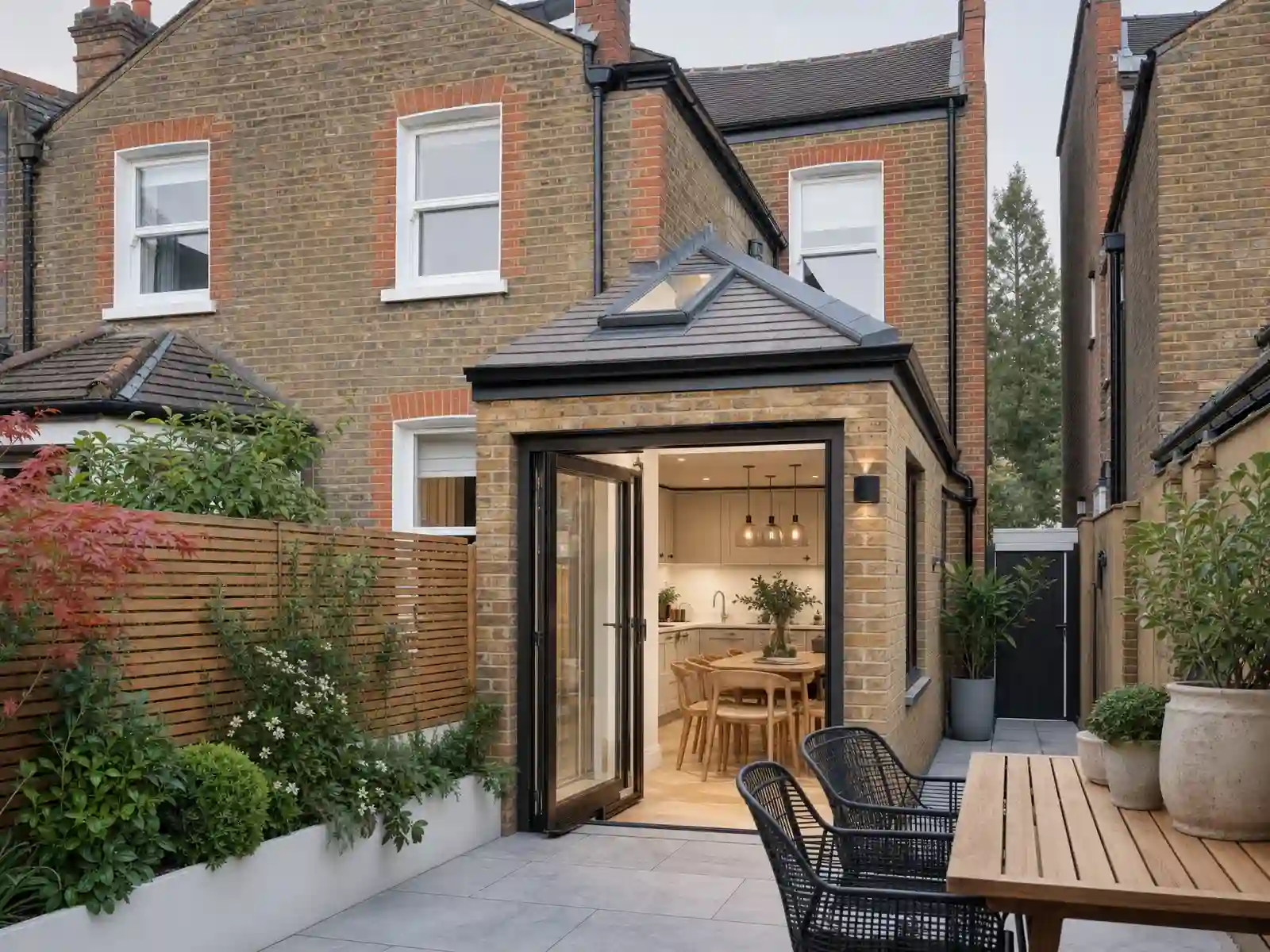
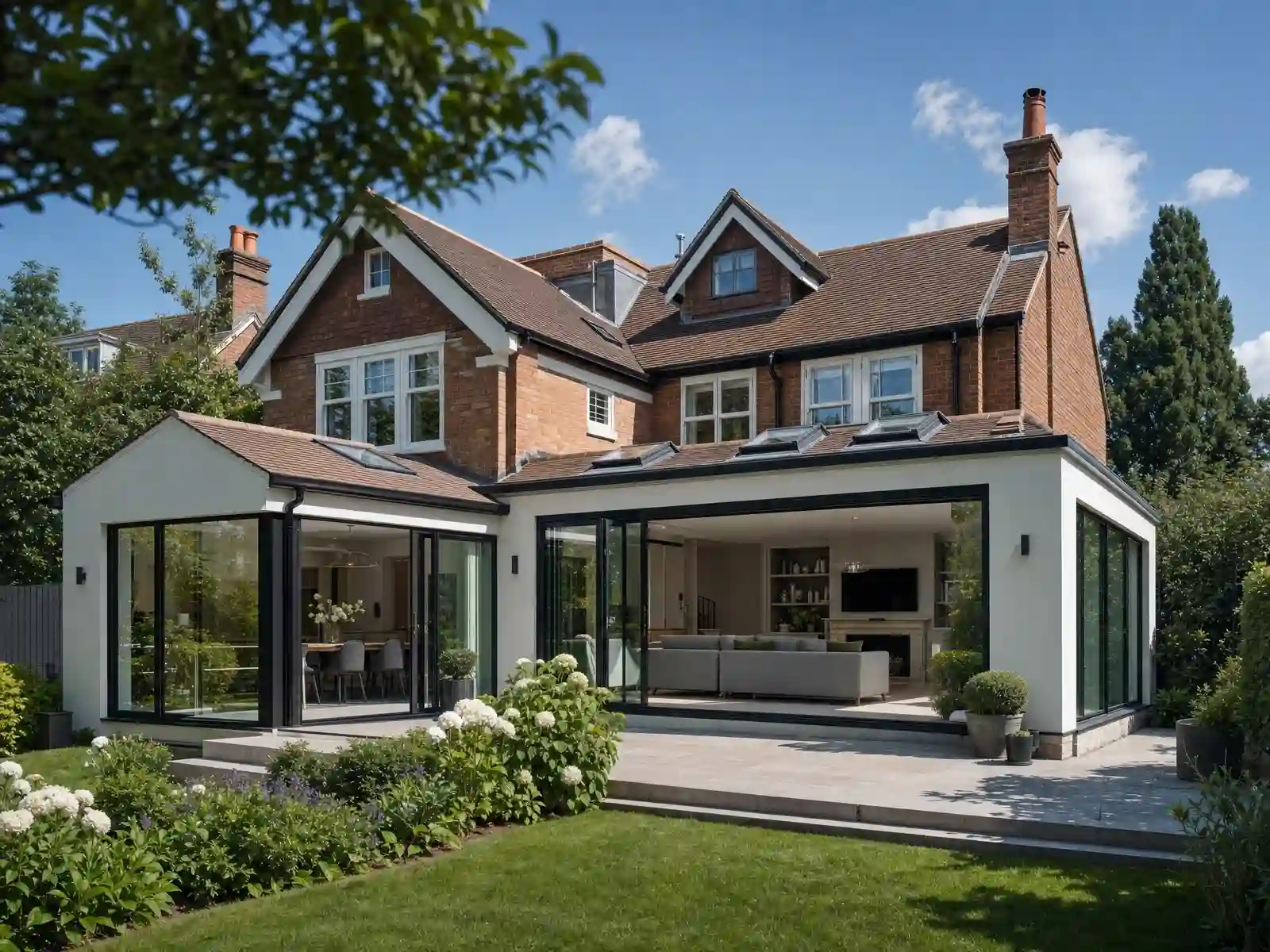
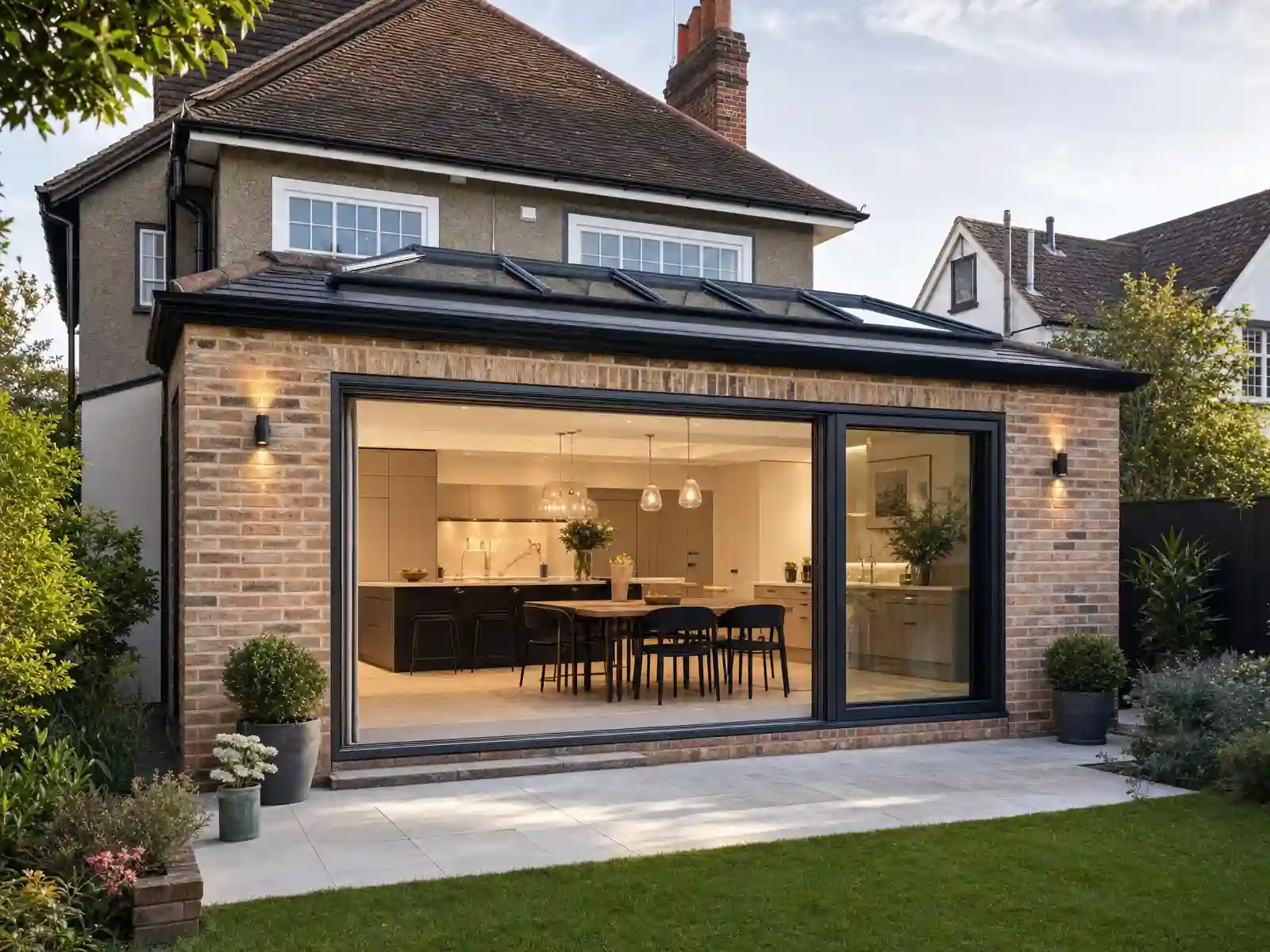
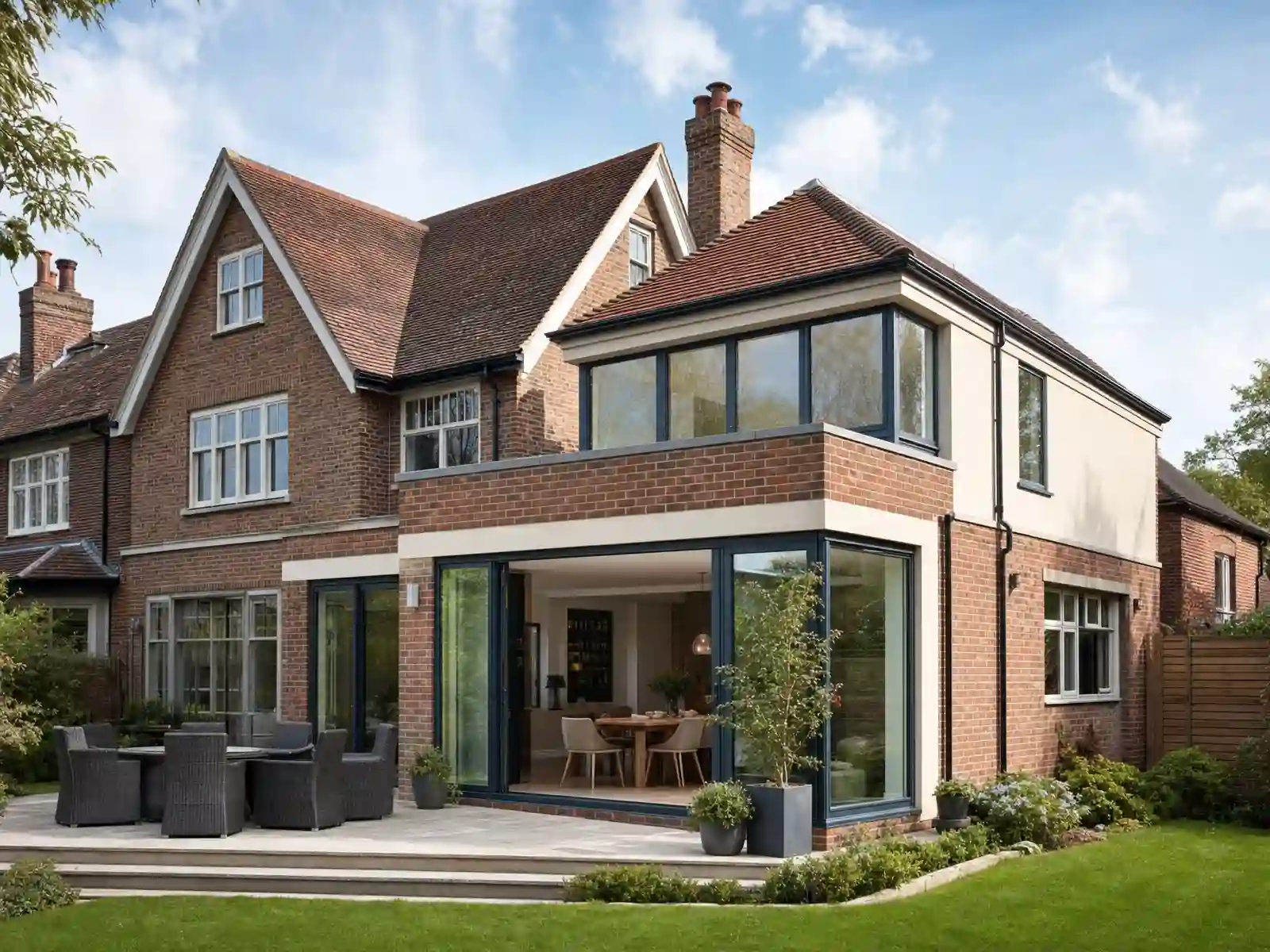
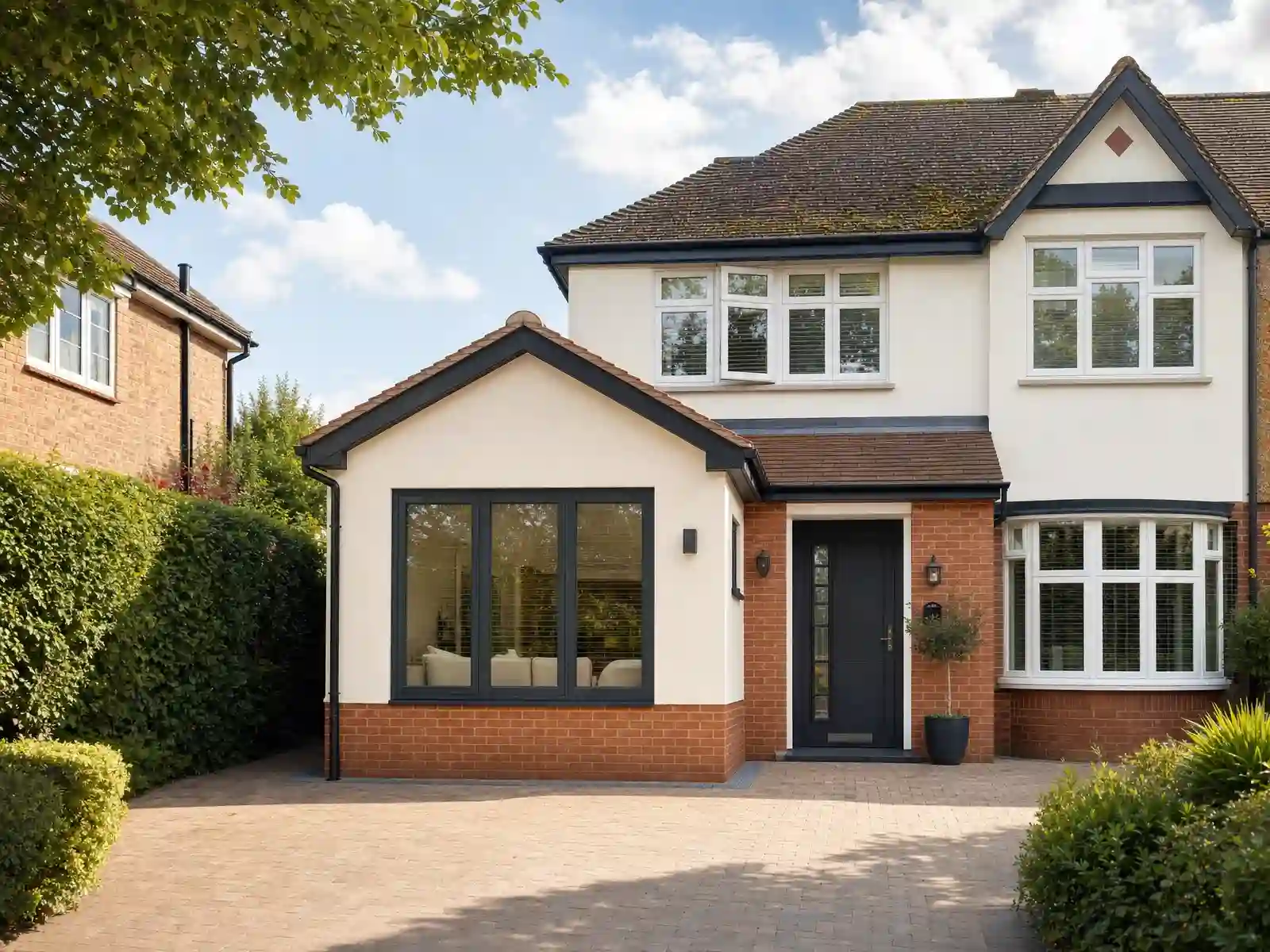
Visual guide to house extension types
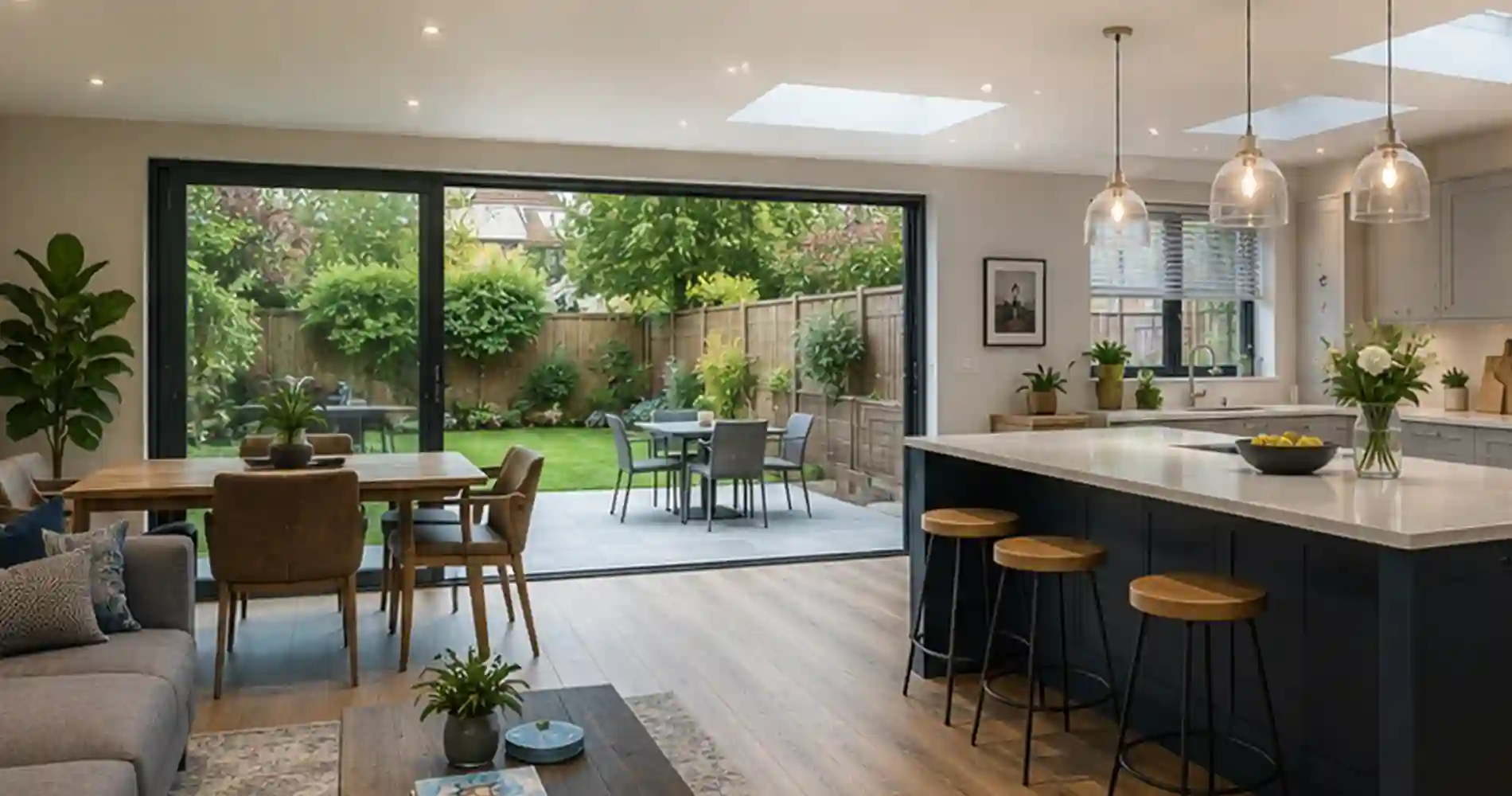
Each extension type solves a different problem. These examples show how the main options compare before you move into drawings, specification and pricing.
Why extension costs vary by type
The cost bands above are only useful if the scope is defined properly. Two projects with the same footprint can have very different structural, glazing, kitchen, drainage and finish requirements. The table below explains what usually moves the budget for each option and how to control it before construction starts.
| Extension type | Main cost drivers | Cost control advice |
|---|---|---|
| Rear extension | Depth, structural openings, roof design, glazing, drainage, flooring and garden access. | Define opening widths, rooflights, doors and internal finishes before final pricing. |
| Side return extension | Party wall requirements, drainage runs, steelwork, rooflights and working space. | Resolve drainage and neighbour matters early to reduce delays and redesign. |
| Wrap-around extension | Multiple structural zones, roof integration, internal reconfiguration, kitchen specification and glazing. | Price from coordinated drawings and a detailed specification rather than concept sketches. |
| Kitchen extension | Kitchen units, appliances, worktops, lighting, underfloor heating, flooring and utility layouts. | Separate core construction cost from kitchen and finish allowances so the budget is clear. |
| Double-storey extension | Foundations, scaffolding, rooflines, first-floor layout, bathrooms, windows and structural load paths. | Test planning, structure and first-floor layout before committing to the final footprint. |
| Garage conversion | Insulation, damp protection, floor build-up, fire separation, glazing, heating and electrics. | Check the existing garage structure and floor level before assuming it will convert simply. |
For early budget planning, use the house extension cost calculator. For a more detailed appointment, contact HWP Design & Build so we can review your site, brief, drawings and specification.
Not sure which extension type is right for your property?
We can review your current layout, garden space, side access, planning context, likely structure, drainage and budget before recommending the most sensible extension route.
Planning permission, permitted development and local constraints
Extension type affects the planning route. Some modest single-storey rear extensions may be possible under permitted development, but side extensions, larger rear extensions, double-storey extensions, conservation-sensitive homes and projects close to boundaries need careful checks.
We can review whether your proposal is likely to need planning permission, whether a lawful development certificate is sensible, and how the design should respond to local expectations in Elmbridge, Surrey and nearby South West London.
- Permitted development checks for depth, height, width, boundary position and materials.
- Householder planning applications where the design falls outside permitted development limits.
- Conservation, neighbour amenity, overlooking, daylight and street-scene considerations.
- Coordination between drawings, structure, specification and build scope.
Which extension type suits Elmbridge and Surrey homes?
Homes around East Molesey, Thames Ditton, Esher, Walton-on-Thames, Weybridge, Kingston and Surbiton vary widely, from compact terraces and semi-detached homes to larger detached properties. The best extension route should respond to the house type, local planning context and the way the family uses the space.
| Area | Common home improvement need | Extension types often worth exploring |
|---|---|---|
| East Molesey / West Molesey | Family kitchen space, better garden connection and practical storage. | Rear, kitchen, single-storey and wrap-around extensions. |
| Hampton Court / Thames Ditton | Character-home upgrades, sensitive rooflines and proportionate additions. | Rear, kitchen and carefully detailed side return extensions. |
| Esher / Claygate | Larger family homes, premium specification and whole-home flow. | Wrap-around, double-storey, kitchen and larger single-storey extensions. |
| Kingston / Surbiton | Terrace and semi-detached layouts with side, rear and party wall constraints. | Side return, rear, kitchen and garage conversion options. |
| Walton-on-Thames / Weybridge / Cobham | Detached and semi-detached homes with scope for larger, specification-led improvements. | Double-storey, wrap-around, kitchen and full single-storey extensions. |
How HWP helps you move from options to a fixed-price quotation
Once you know the likely extension route, the next stage is to turn the idea into a clear scope that can be designed, approved and priced properly.
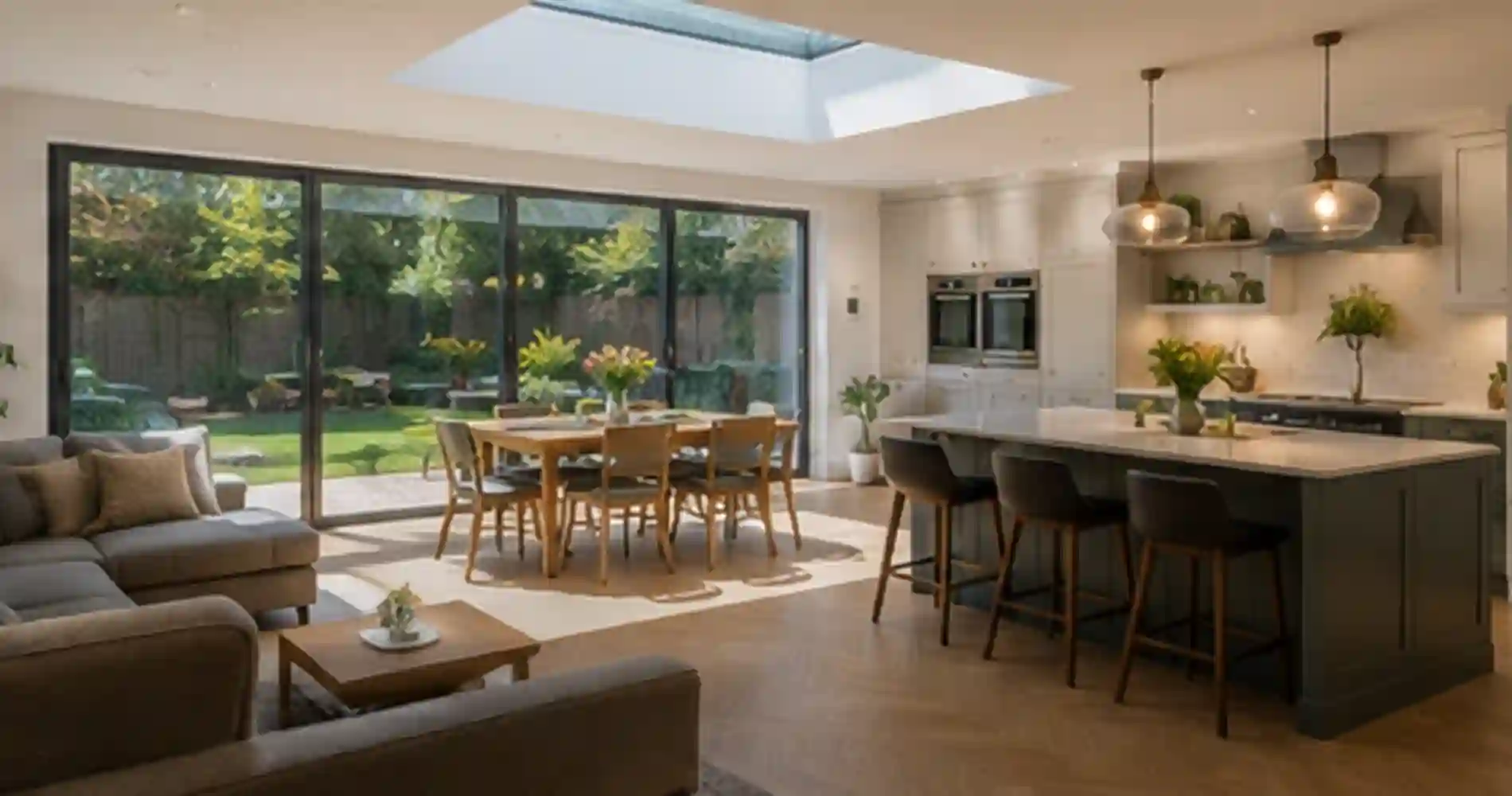
Recent house extension project inspiration
Explore recent projects to see how different extension types, planning constraints, structural requirements and internal layouts can be approached.
.webp)
Useful house extension guides
Related house extension services
Planning a house extension? These related services help with approvals, structure, project coordination and wider home improvement work.
Types of House Extensions FAQs for Surrey & Elmbridge Homeowners
A garage conversion is often the lowest-cost route where the existing structure is suitable. A compact rear or single-storey extension can be the next step up, while wrap-around and double-storey extensions usually sit at the higher end because they involve more structure, roof work, access planning, services and internal reconfiguration.
For many Surrey and Elmbridge homes, a rear or kitchen extension is best for open-plan living and garden connection, a side return can improve a narrow layout, a wrap-around can create the biggest ground-floor transformation, and a double-storey extension can add bedrooms or bathrooms as well as living space.
Costs can be higher where specification, access, glazing, structural work, party wall matters, conservation sensitivity and finish expectations are more demanding. We review the property, drawings, approvals and specification before preparing a fixed-price quotation.
Not always. Some single-storey rear and side extensions may be possible under permitted development, but limits and conditions apply. Larger extensions, double-storey extensions, conservation-sensitive projects and changes to the front or side elevation often need closer planning review.
No. The figures are broad guide ranges to help compare extension types. A fixed-price quotation needs a defined scope, site review, drawings, specification, approvals, structural information, access assumptions and finish allowances.
Use the calculator for early budget planning and this page to compare extension types. A quotation is the next step when you have a property, brief, drawings or preferred route and want HWP to review site conditions, scope, specification, approvals and buildability.
Yes. We can assess how your home currently works, where the space is needed, how planning and party wall matters may affect the project, and which extension type offers the best balance of cost, space, value and disruption.
Homeowners often focus on the main build cost but forget design work, structural calculations, planning fees, Building Regulations, party wall matters, drainage alterations, utility upgrades, temporary works, kitchen or bathroom fittings, flooring, decorating, landscaping and VAT. We help define these allowances early so the quotation reflects the real project scope.
Compare extension types, guide costs and practical next steps.
Need help comparing extension types and costs?
Whether you are considering a rear extension, side return, wrap-around, kitchen extension, double-storey extension or garage conversion, we can assess your property, explain the likely cost drivers, review the planning route and provide fixed-price clarity before work begins.
House extension advice across East Molesey, Elmbridge, Surrey and nearby South West London.