A hip to gable loft conversion is one of the most effective ways to create a larger, more practical room in the roof space of a semi-detached or detached Surrey home. By replacing the sloping side of a hipped roof with a vertical gable wall, the conversion can unlock valuable headroom, floor space and design flexibility.
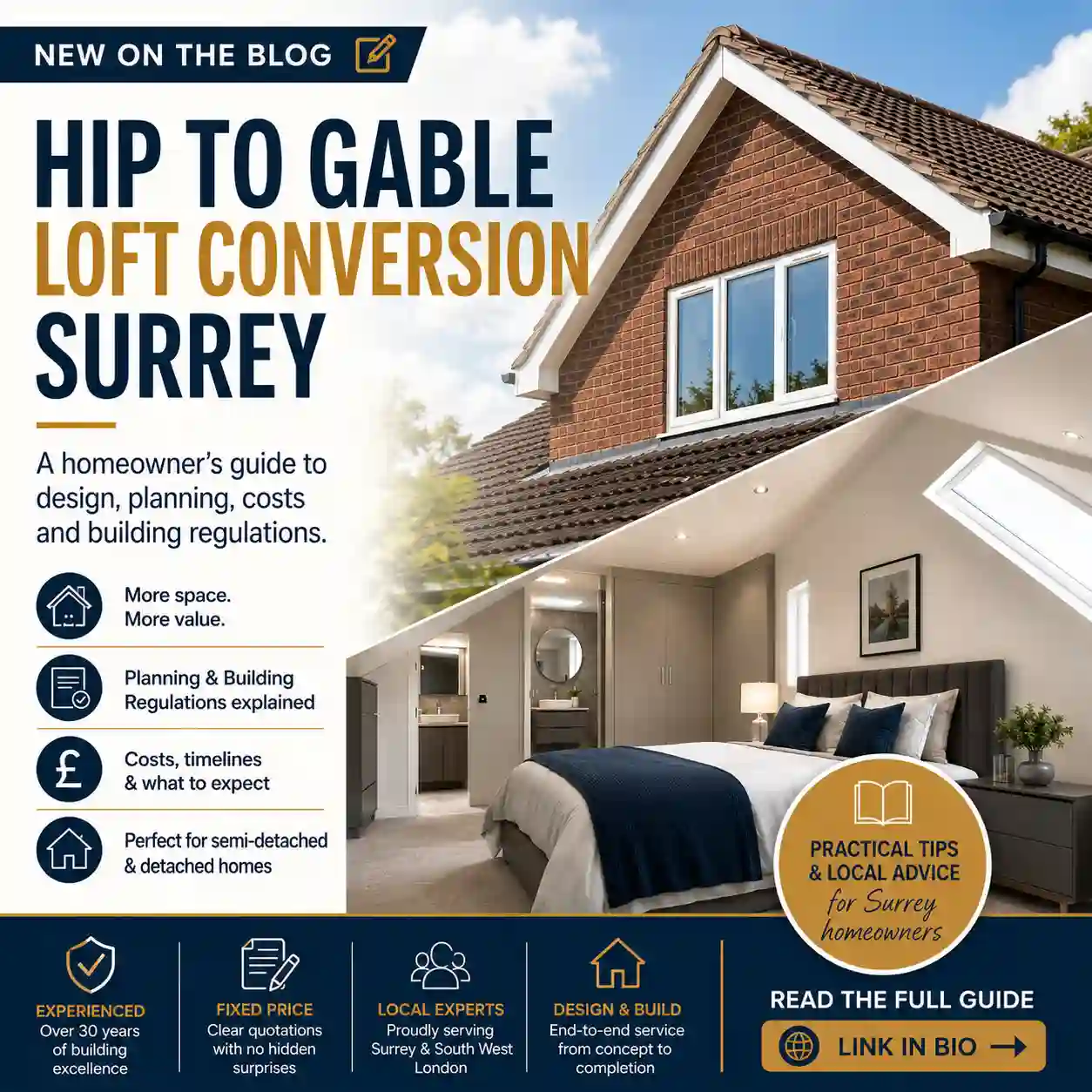
For homeowners in Elmbridge, East Molesey, Esher, Walton-on-Thames, Weybridge, Thames Ditton and nearby Surrey locations, a hip to gable loft conversion can be a strong alternative to moving house. It can create space for a main bedroom suite, home office, children’s bedrooms, guest accommodation or a quiet top-floor living area.
HWP Design & Build provide hip to gable loft conversions as part of a wider loft conversion and design and build service, helping Surrey homeowners move from early feasibility and drawings through to construction, finishing and handover.
What Is a Hip to Gable Loft Conversion?
A hipped roof slopes down on the side as well as the front and rear. This shape is attractive, but it often reduces usable loft space because the roof slope cuts into the area where headroom is needed. A hip to gable loft conversion removes that sloping side section and builds the roof up vertically to form a new gable end.
The result is a more squared-off roof space with improved ceiling height and more practical floor area. In many Surrey homes, a hip to gable conversion is combined with a rear dormer to maximise the available space even further. This can create enough room for a generous bedroom, ensuite, storage and staircase access.
Which Surrey Homes Are Best Suited to Hip to Gable Loft Conversions?
Hip to gable loft conversions are most commonly suitable for properties with a hipped roof, especially:
- Semi-detached houses with a hipped side roof
- Detached homes with one or more hipped roof slopes
- End-of-terrace properties where the roof form allows side alteration
- 1930s and mid-century Surrey homes with generous roof space
- Homes where a simple rooflight conversion would not provide enough headroom
In areas such as East Molesey, Walton-on-Thames, Esher and Weybridge, many homes have roof shapes that can make this type of conversion worth exploring. However, every property should be assessed individually. Existing roof height, structure, access, neighbouring properties, planning constraints and the condition of the building all affect what is possible.
Hip to Gable vs Dormer Loft Conversion
A hip to gable conversion and a dormer loft conversion are often discussed together, but they are not the same thing. A hip to gable conversion changes the side roof profile. A dormer usually projects from the rear roof slope to create additional usable internal space.
For many Surrey homes, the best solution is a combined hip to gable and rear dormer loft conversion. The hip to gable element improves the side roof volume, while the dormer helps create a full-width usable room at the rear. This can be particularly helpful where the homeowner wants an ensuite bedroom or two smaller rooms rather than one compact loft room.
| Conversion type | Best for | Typical advantage |
|---|---|---|
| Hip to gable | Semi-detached, detached and some end-of-terrace homes | Improves headroom and roof volume by replacing the sloping side roof |
| Dormer | Homes needing extra rear space and standing room | Creates a more practical room shape and can help accommodate an ensuite |
| Hip to gable plus dormer | Homes where maximum loft space is the priority | Combines side roof volume with rear usable space |
| Velux / rooflight | Lofts with enough existing height | Less structural change, but usually less additional usable space |
For a wider comparison of options, see our guide to loft conversion types in Surrey.
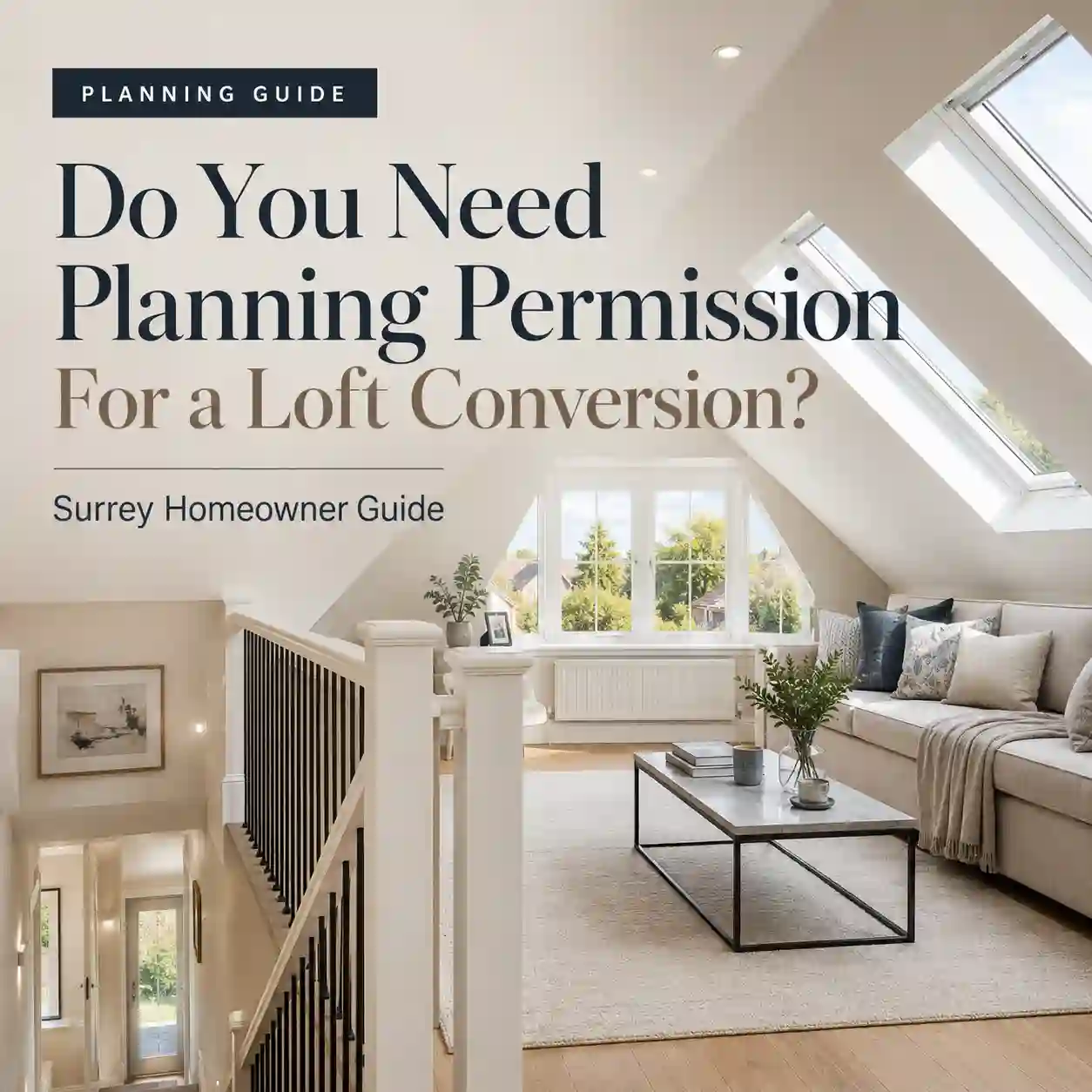
Do You Need Planning Permission for a Hip to Gable Loft Conversion in Surrey?
Many loft conversions can fall under permitted development, but only if strict limits and conditions are met. For hip to gable loft conversions, the key issues usually include roof volume, roof height, materials, the position of the enlargement, windows, previous roof additions and whether permitted development rights have been restricted or removed.
In simple terms, a hip to gable loft conversion may not need a full householder planning application if it complies with permitted development rules. However, this should never be assumed. Homes in conservation areas, listed buildings, flats, maisonettes, previously extended properties or homes affected by planning conditions may require a different approach.
For homeowners in Elmbridge and nearby Surrey boroughs, a planning permission check is an important early step. In many cases, applying for a Lawful Development Certificate is a sensible way to confirm that the proposed loft conversion is lawful before work begins.
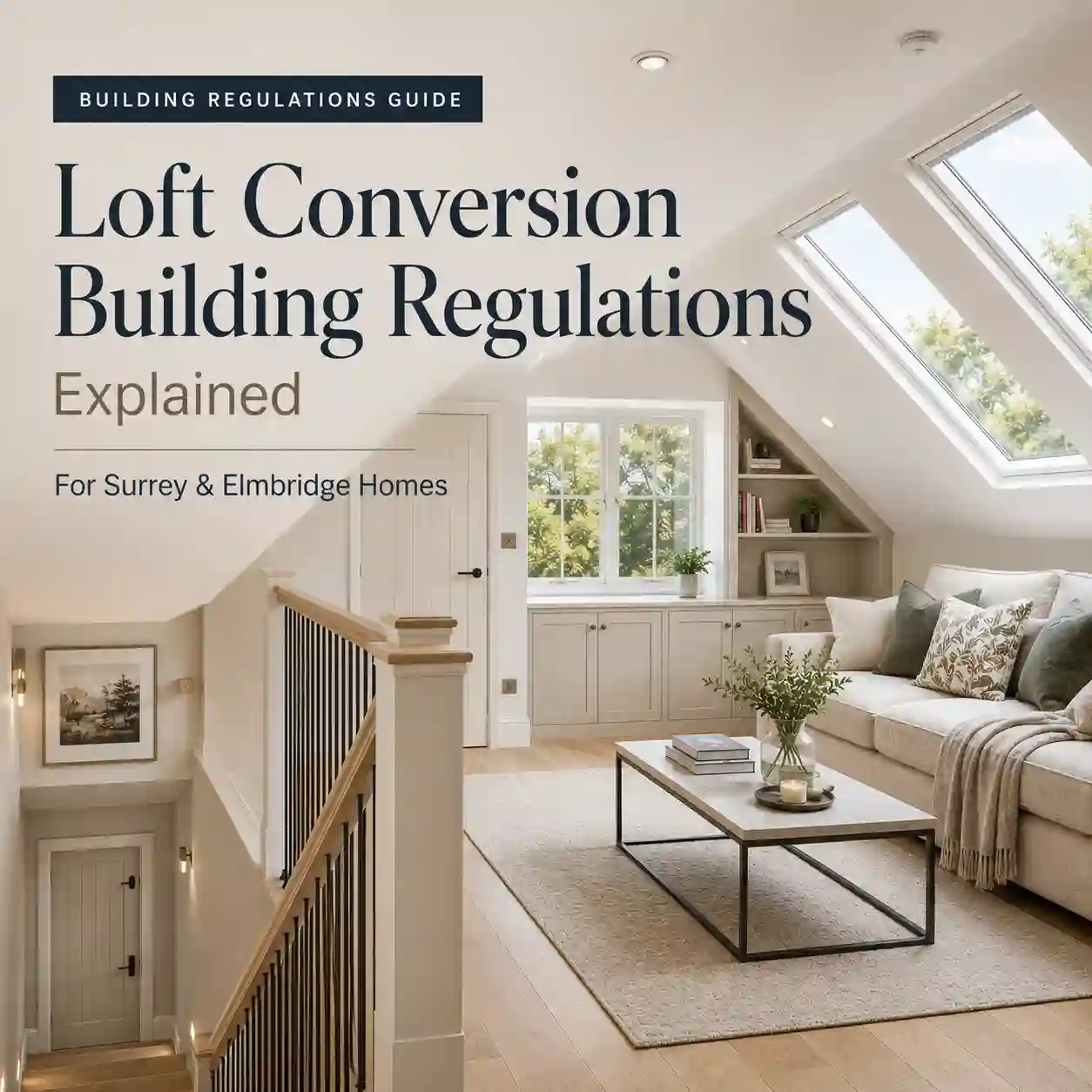
Building Regulations for Hip to Gable Loft Conversions
Even where planning permission is not required, building regulations approval will be needed for a loft conversion that creates liveable space. This is a separate process from planning and focuses on safety, structure and performance.
Building regulations for a hip to gable loft conversion may cover:
- Structural design, steel beams and roof alterations
- Floor strengthening and load transfer
- Fire safety, escape routes and fire doors where required
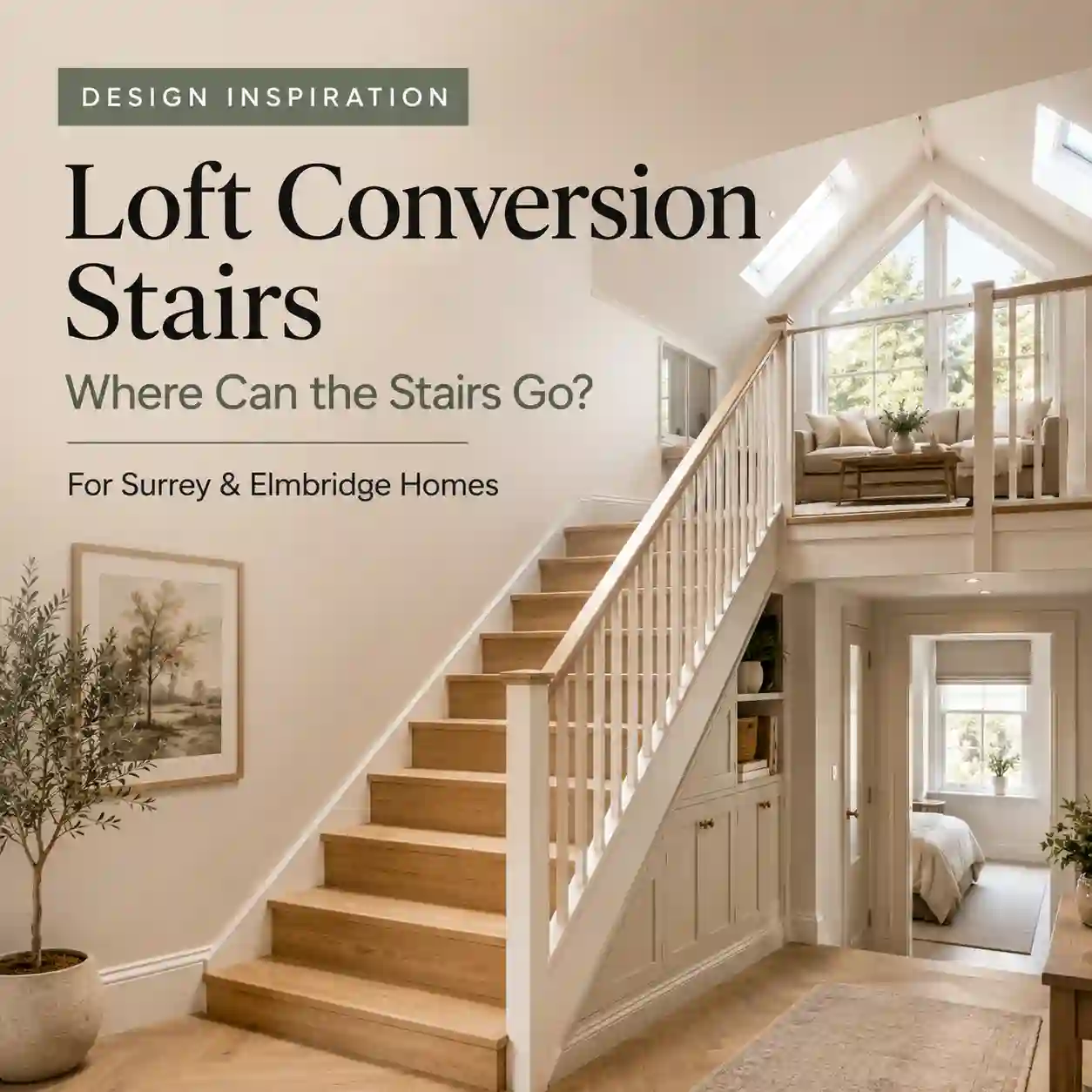
- Staircase design, pitch, headroom and access
- Thermal insulation and ventilation
- Sound insulation where relevant
- Electrical safety and heating provision
- Drainage and plumbing where an ensuite is included
HWP can help coordinate the practical design and build process so that the conversion is planned around the structure of the existing home, not treated as an isolated roof alteration. Learn more about our building regulations support.
Party Wall Considerations
If your home is semi-detached or terraced, a loft conversion may involve work to or near a shared wall. This can include cutting into a party wall to insert structural beams or carrying out works that affect the shared structure. In those circumstances, the Party Wall etc. Act 1996 may apply.
Party wall matters should be considered early because notice periods, neighbour responses and surveyor appointments can affect the programme. HWP can advise on when specialist party wall input may be needed and how this fits into the wider project timeline. See our party wall support page for more information.
How Much Does a Hip to Gable Loft Conversion Cost in Surrey?
The cost of a hip to gable loft conversion in Surrey depends on the size of the roof, the complexity of the structure, whether a dormer is included, the level of finish, access arrangements, plumbing requirements, glazing, insulation, planning work and building regulations requirements.
A basic rooflight conversion will usually be less complex than a hip to gable conversion, while a hip to gable plus rear dormer with ensuite will generally require more structural work, more design coordination and a larger budget. For this reason, online averages can be misleading unless they are based on a detailed specification for your actual property.
HWP Design & Build focus on clear, fixed-price quotations based on a detailed specification. This helps homeowners understand what is included before work starts and reduces the risk of vague allowances or unexpected gaps in the quote.
For broader budgeting advice, see our Elmbridge loft conversion costs, planning and timeline guide.
Design Ideas for a Hip to Gable Loft Conversion
A well-designed hip to gable conversion should feel like a natural extension of the home, not just a converted roof void. The best layouts balance usable space, storage, light, privacy and access.
Popular design ideas include:
- A main bedroom with ensuite shower room
- A guest bedroom with built-in eaves storage
- A quiet home office away from the main living areas
- Two children’s bedrooms in a larger roof space
- A top-floor suite with rooflights and rear dormer glazing
- Integrated wardrobes built into lower roof areas
- Natural finishes, efficient insulation and low-energy lighting
Because HWP also handles renovations and refurbishments, the loft can be planned alongside wider home improvements such as staircase reconfiguration, first-floor layout changes, bathroom upgrades or future extension plans.
Why Choose HWP Design & Build?
HWP Design & Build are a local design and build company serving Surrey, Elmbridge, East Molesey and surrounding London-border areas. Our team brings over 30 years of industry experience across loft conversions, home extensions, renovations, basements and structural home improvement projects.
Fixed-price clarity
We prepare detailed specifications and fixed-price quotations so you understand the scope before the build begins.
Design and build support
We help coordinate design, structural considerations, planning, building regulations and construction under one joined-up process.
Local Surrey knowledge
We work across Elmbridge, East Molesey, Esher, Walton-on-Thames, Weybridge and nearby areas, with an understanding of local homes and homeowner priorities.
Whole-home thinking
We can plan your loft conversion as part of a wider home improvement strategy, including extensions, refurbishments and future upgrades.
You can also view a relevant local example here: hip to gable loft refurbishment in Walton KT12.
Areas We Cover for Hip to Gable Loft Conversions
HWP Design & Build work across Surrey and the South West London border, including:
- East Molesey
- Elmbridge
- Esher
- Walton-on-Thames
- Weybridge
- Thames Ditton
- Hampton Court
- Kingston upon Thames
- Surbiton
- West Molesey
Hip to Gable Loft Conversion FAQs
No. A hip to gable conversion is usually suited to homes with a hipped roof, such as many semi-detached, detached and some end-of-terrace properties. The existing roof height, structure, access and planning constraints all need to be checked before deciding on the best loft conversion type.
It may fall under permitted development if the property and design meet the relevant limits and conditions. However, planning permission may be required for some homes, including listed buildings, flats, homes in sensitive areas, properties with restricted permitted development rights or designs that exceed permitted development limits.
Yes. A loft conversion that creates liveable space requires building regulations approval. This covers structural safety, fire protection, stairs, insulation, ventilation and other technical requirements.
Yes, many homeowners combine a hip to gable conversion with a rear dormer to create more usable space. This can be ideal for a bedroom and ensuite layout, but the design still needs to comply with planning and building regulations requirements.
If your loft conversion affects a shared wall, such as inserting beams into a party wall, the Party Wall etc. Act 1996 may apply. This is common for semi-detached and terraced homes, so it should be checked early in the process.
Timescales vary depending on the design, structural work, approvals, access, weather and level of finish. A detailed site survey and specification are needed before a realistic programme can be confirmed.
Planning a Hip to Gable Loft Conversion in Surrey?
If you are considering a hip to gable loft conversion in East Molesey, Elmbridge, Walton-on-Thames, Esher, Weybridge or the surrounding Surrey area, HWP Design & Build can help you assess the potential of your roof space and prepare a clear fixed-price quotation.