- Location :SW20 (Raynes Park)
- Project Type :L-Shaped Dormer Loft Conversion
- Duration :12 Weeks
- Completion :2026
- Local Authority :London Borough of Merton

This Raynes Park SW20 home had the type of rear outrigger layout often found across South West London terraces and period family houses. The homeowners wanted a larger bedroom suite with an ensuite, better storage and proper staircase access, but they did not want the new room to feel compromised by awkward roof slopes or disconnected from the rest of the house.
We delivered an L-shaped dormer loft conversion that used both the main rear roof slope and the roof over the rear addition. This created a more generous loft footprint than a standard rear dormer would have provided, allowing the layout to include a main sleeping area, ensuite, built-in storage and improved circulation.
The works were planned as a full loft conversion, with structure, stairs, insulation, drainage, ventilation, fire safety and sign-off coordinated through our Building Regulations support. Early feasibility work also reviewed roof-volume limits, neighbouring properties, party wall matters and the planning route through the London Borough of Merton.
Raynes Park sits close to Wimbledon, New Malden, Motspur Park and West Barnes, with a mix of Victorian, Edwardian, interwar and later family homes. In this local context, the L-shaped dormer approach was chosen because the project needed maximum usable space without extending into the garden.
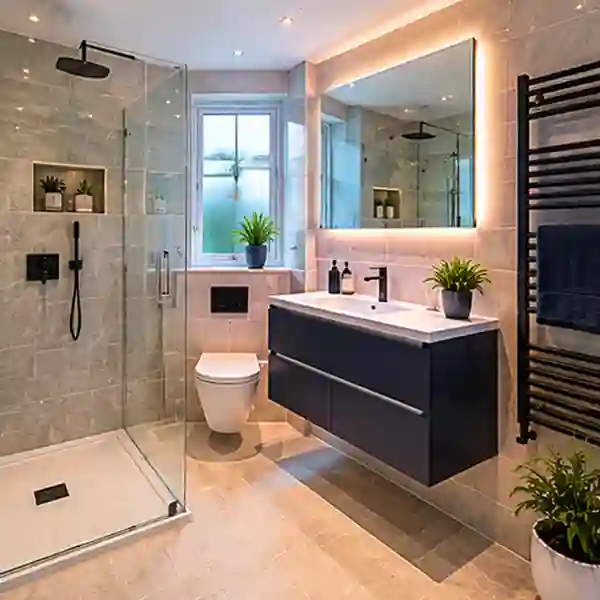
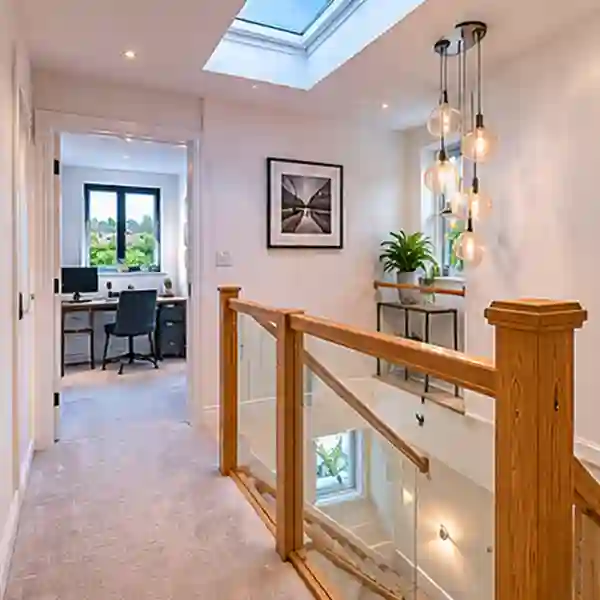
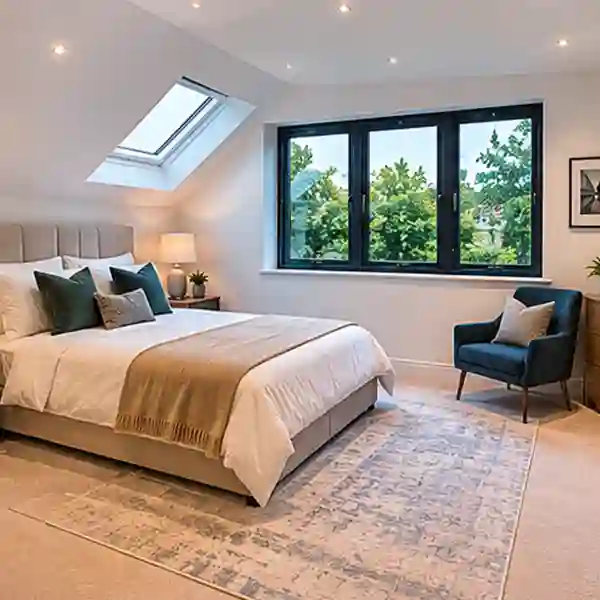
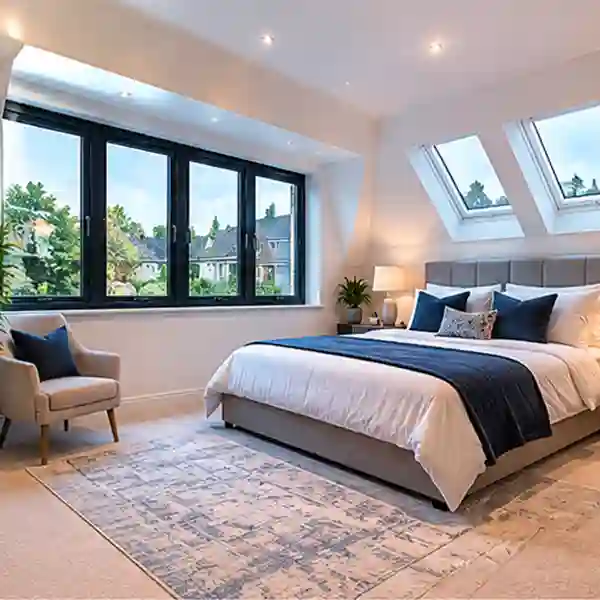
The homeowners wanted the top floor to work as a complete suite rather than a basic loft room. The priorities were a comfortable bedroom, a practical ensuite, usable eaves storage, a staircase that felt like a natural continuation of the home and enough headroom to make the new floor feel permanent and properly integrated.
A garden extension would have changed the ground-floor footprint and reduced outside space. The loft route allowed the family to gain valuable living accommodation while keeping the garden and existing ground-floor layout intact.
A standard rear dormer would have improved headroom over the main roof, but it would not have fully used the roof over the rear outrigger. For this Raynes Park property, the rear addition created an opportunity: by extending the dormer over both roof sections, the loft could become a more practical master-suite style space rather than a single room with restricted edges.
The L-shaped footprint made it easier to zone the space. The main dormer created the larger bedroom area, while the dormer over the rear addition helped form the ensuite and circulation space. This also improved storage opportunities, because low-level eaves and awkward junctions could be designed into the layout rather than treated as leftover space.
This approach is especially valuable in South West London homes where gardens are important and families often want more space without losing amenity area. Building upward allowed the family to gain a new bedroom suite while keeping the existing rear garden unchanged.
The planning route for an L-shaped dormer depends on property type, existing roof volume, previous alterations, the position of the dormer, conservation constraints, Article 4 directions and whether permitted development rights remain available. Loft roof enlargements can sometimes be delivered under permitted development where strict limits are met, but the volume allowance and roof form need to be reviewed carefully before a project is treated as permitted development.
For this Raynes Park project, the key checks included the main-roof and rear-outrigger volumes, the visual relationship with adjoining rooflines, privacy from dormer windows, party wall triggers, stair headroom and the fire-safety strategy for the full escape route. The Building Regulations route was planned alongside the design so the loft could be treated as a habitable room, not just improved storage space.
Raynes Park loft conversions need careful local review because SW20 includes varied property types, terraced streets, semi-detached homes, interwar houses, rear additions and roads where roof alterations can be visible from neighbouring gardens or side streets. L-shaped dormers can be very effective, but they need to be designed around roof-volume allowance, visual impact, neighbouring amenity, party wall triggers and Merton planning expectations.
| Local factor | Why it mattered | How the project responded |
|---|---|---|
| Rear outrigger layout | The existing back addition created an opportunity for a larger L-shaped footprint. | The design used the main rear roof and outrigger roof to create a larger top-floor suite. |
| Roof-volume limits | L-shaped dormers can quickly use the available permitted development volume allowance. | The design was reviewed against previous alterations, roof size and planning route before progressing. |
| Terraced and semi-detached neighbours | SW20 homes can be close together, so structure, privacy, noise and party wall issues need early review. | Neighbouring rooflines, shared walls, overlooking and steel bearing positions were checked at design stage. |
| Stair position | Poor stair placement can reduce bedroom space below or create awkward headroom at the new top floor. | The staircase was planned with the existing landing so access felt natural and compliant. |
| Merton planning context | Some Raynes Park and West Wimbledon streets require a more sensitive roof-extension approach. | The design kept the dormer focused to the rear and reviewed local constraints before works progressed. |
| Ensuite drainage | Bathrooms in lofts can become costly if drainage and ventilation routes are not planned early. | The ensuite was positioned around workable soil, water and ventilation routes to avoid avoidable disruption. |
L-shaped dormers are powerful space-makers, but they are more complex than a simple rear dormer. The feasibility stage focused on roof structure, the main-roof-to-outrigger junction, waterproofing, stair access, planning route and whether the layout could justify the additional structural work.
| Feasibility item | Risk if missed | Project response |
|---|---|---|
| Main roof and outrigger junction | The connection between the two dormers can create awkward structure and drainage if not detailed properly. | The dormer junction, falls, gutters, flashings and weathering details were coordinated before construction. |
| Structural steel design | The existing ceiling joists and roof members are not normally suitable for habitable loads. | A structural design was developed for the new floor, dormer framing and bearing points. |
| Stair headroom | A generous loft can still fail in practice if the stair arrives in the wrong location. | The stair route was reviewed alongside dormer height, internal layout and Building Regulations requirements. |
| Ensuite placement | Poor ensuite positioning can waste space or create expensive drainage routes. | The ensuite was placed where headroom, drainage, ventilation and privacy could work together. |
| Fire strategy | Adding a new storey changes the escape route and fire-safety requirements for the whole house. | Interlinked alarms, doors, stair enclosure and escape-route requirements were coordinated through Building Regulations. |
| Insulation and overheating | Loft rooms can lose heat in winter and overheat in summer if the roof build-up is not specified properly. | Insulation, ventilation, glazing and solar gain were considered as part of the specification. |
An L-shaped dormer is usually more involved than a simple rear dormer because it extends across two roof sections and creates a more complex junction. Reliable pricing depends on roof structure, property type, planning route, party wall requirements, staircase works, bathroom specification, drainage, glazing, fire safety, insulation and finishing level.
| Scope item | Typical impact on budget | Project note |
|---|---|---|
| L-shaped dormer structure | Major cost driver | Two connected dormer sections require more framing, weatherproofing and junction detailing. |
| Structural steels and new floor | Major cost driver | Needed to support habitable loads and avoid relying on the existing ceiling joists. |
| Staircase and landing alterations | Medium to major cost driver | Critical for safe access, fire strategy and making the new loft feel integrated. |
| Ensuite bathroom | Specification-dependent | Cost depends on drainage, waterproofing, sanitaryware, ventilation, tiling and water pressure. |
| Insulation, ventilation and fire safety | Medium cost driver | Essential for comfort, compliance and year-round usability. |
| Built-in storage and finishing | Specification-dependent | Eaves cupboards and tailored storage helped maximise the irregular loft edges. |
For homeowners comparing a loft conversion with moving house, an L-shaped dormer can be a strong option where the existing home is in the right location but needs one more bedroom, a larger master suite or a private home-office level. Our loft conversion types guide explains how dormer, mansard, hip-to-gable and rooflight options compare.
The programme was sequenced to protect the existing home while the roof was opened, framed and made weather-tight. With L-shaped dormers, the early stages are especially important because two connected roof enlargements, the main roof junction and the rear addition all need to work together.
| Stage | Focus | Why it mattered |
|---|---|---|
| Survey and design review | Roof structure, ridge height, outrigger layout, stairs and ensuite position. | Confirmed that the L-shaped layout was the right solution before works started. |
| Structural works | Steel installation, new floor structure and dormer framing. | Created a compliant habitable floor and supported the new roof form safely. |
| Weatherproofing | Roof coverings, dormer junctions, flashings, gutters and external finishes. | Protected the property and reduced risk at the main roof and outrigger connection. |
| Services and compliance | Electrical, plumbing, ventilation, insulation, fire safety and inspections. | Ensured the new loft could be used as a comfortable, compliant living space. |
| Finishes and handover | Plastering, decoration, ensuite finishes, storage and snagging. | Turned the structural shell into a practical, finished top-floor suite. |
The completed loft created a comfortable master-suite style level with a larger bedroom, ensuite bathroom, built-in storage and a staircase that felt connected to the rest of the home. By using both the main roof and the rear addition, the project delivered more practical floor area than a standard rear dormer could have achieved.
The result gave the homeowners the extra bedroom and bathroom capacity they needed without reducing garden space or requiring a larger ground-floor extension. It also improved the long-term flexibility of the property, making it better suited to family life in a sought-after South West London location.
By using an L-shaped dormer rather than a standard rear dormer, the homeowners gained a much more generous loft layout with space for a main bedroom, ensuite and integrated storage. The design worked because it responded to the property’s rear outrigger layout and used the roof plan more intelligently.
The completed loft delivered valuable extra living space without extending into the garden, while the stair connection, insulation, fire-safety detailing and finishing helped the new top floor feel like a natural part of the Raynes Park home.
Tell us about your loft conversion plans and we’ll review the main roof, rear outrigger, planning route, roof-volume allowance, party wall position, staircase access, ensuite options and best layout for your SW20 property.
Serving Raynes Park, Wimbledon, Kingston upon Thames, Surbiton, Putney, Wandsworth and nearby South West London areas.
Explore more about our loft conversion services, dormer loft conversions, hip-to-gable loft conversions, mansard loft conversions, Velux rooflight loft conversions, planning permission support, party wall support, Building Regulations coordination and design and build services in Raynes Park.