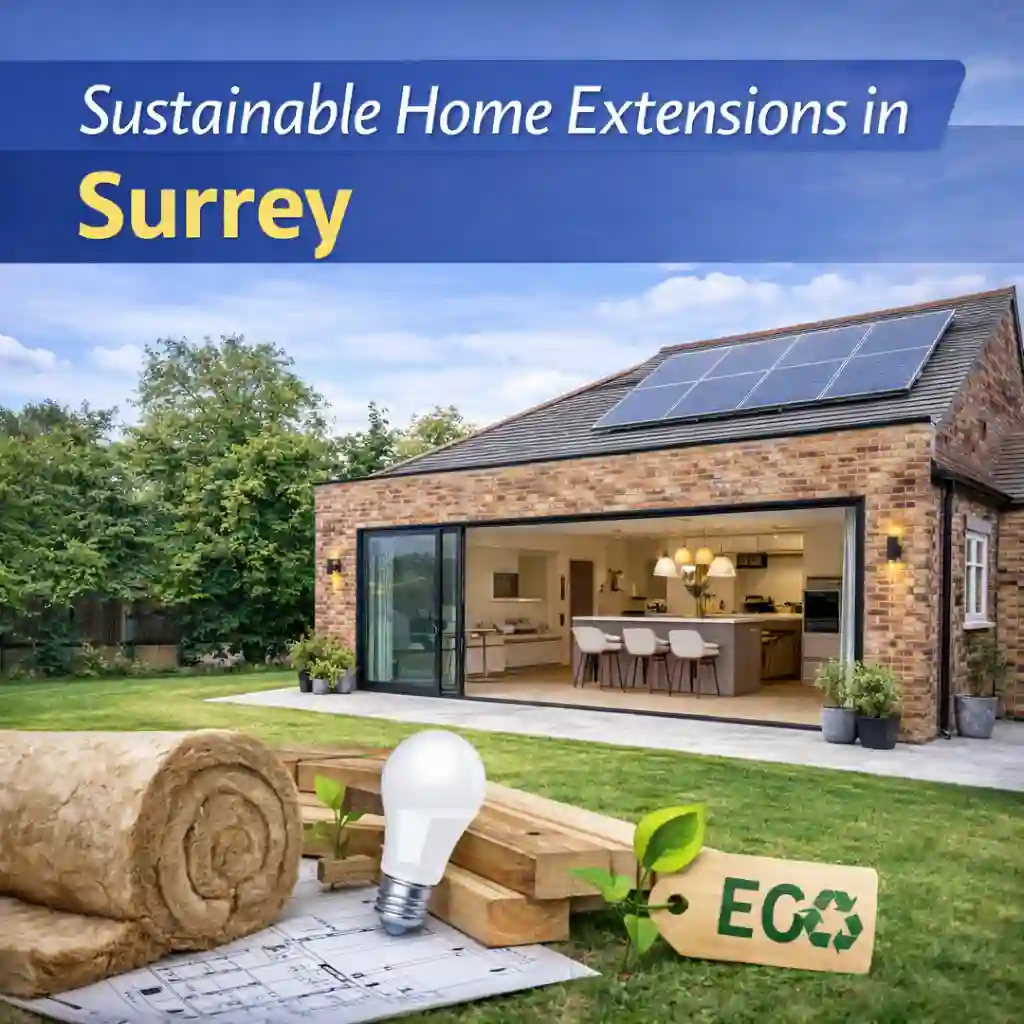
A sustainable extension is not just one with a fashionable eco label. It is one that uses space well, reduces unnecessary energy loss, avoids short-lived specification choices, manages water sensibly and creates a healthier, more durable home. In practice, the best sustainable extension strategies are often the ones that combine good design with good building physics: right-sized spaces, strong insulation, careful detailing, sensible glazing, effective ventilation and materials chosen for performance as well as appearance.

Start with a fabric-first mindset
For most homeowners, the most reliable sustainability gains come from getting the building fabric right first. That means prioritising insulation, airtightness, thermal continuity, well-performing windows and doors, and thoughtful detailing before spending the budget on visible gadgets.
This is also the direction of modern building regulation guidance. Energy efficiency requirements for dwellings in England sit within Approved Document L, while ventilation requirements sit within Approved Document F. In simple terms, a low-energy extension is not just about keeping heat in; it is also about ensuring the home breathes properly.
The sustainable decisions that usually matter most
Not every project needs every measure. The smart approach is to choose the biggest-impact steps that suit the house, budget and long-term plan.
| Design decision | Why it matters | Practical homeowner takeaway |
|---|---|---|
| Insulation and thermal continuity | Reduces heat loss and helps the extension feel comfortable year-round. | Do not allow weak junctions and thermal bridges to undermine otherwise good insulation levels. |
| Airtight detailing | Stops uncontrolled draughts and energy loss. | Good workmanship matters as much as the specification line on the drawing. |
| Ventilation strategy | Healthier indoor air and lower condensation risk are essential in better-sealed homes. | Think about extract, background ventilation and how the whole space will actually be used. |
| Right-sized glazing | Glazing brings light and connection, but too much can increase heat loss or overheating risk. | Choose glazing for orientation, comfort and layout — not just visual drama. |
| Efficient lighting and appliances | Operational energy matters over the life of the extension. | Plan lighting and appliance choices early rather than treating them as extras. |
| Durable materials | Longer-life materials reduce maintenance and replacement cycles. | A material that wears well can be more sustainable than a cheaper short-life option. |
| Reuse and retention | Using more of the existing building intelligently can reduce waste and embodied impact. | The greenest square metre is often the one you do not have to demolish and rebuild. |
| Drainage and rainwater management | Surface water and site drainage affect resilience as well as compliance. | Hard landscaping and extension design should not simply push water problems elsewhere. |
| Solar-ready thinking | Some households may want PV now or later. | Roof structure, orientation and future cabling routes are easier to plan early than retrofit later. |
Bigger is not automatically greener
One of the most overlooked sustainability decisions is simple: build only the space that genuinely improves how you live. Oversized extensions cost more to construct, more to heat, more to cool and more to maintain.
Often the best sustainable result comes from a smarter plan rather than a larger one. Replanning the existing ground floor, using a side return, or adding a focused kitchen extension may deliver better daily living than a much larger footprint.
Where sustainability and compliance overlap
Modern low-energy design works best when design ambition and compliance are treated together rather than separately.
| Topic | Why it matters in an extension | What to think about |
|---|---|---|
| Part L energy efficiency | Sets the framework for thermal performance in dwellings. | Insulation, glazing performance and the overall thermal quality of the extension need joined-up thinking. |
| Part F ventilation | Better-sealed homes still need adequate fresh air and moisture control. | Kitchens, utility spaces and family rooms need ventilation that suits real use, not just minimum assumptions. |
| Structure and junction detailing | Poor junctions can undermine thermal performance and create condensation risks. | Coordinate structure with thermal design instead of treating them as separate conversations. |
| Drainage and site water | Sustainability is not only about energy; resilience matters too. | Think about run-off, external levels and whether local guidance on flood risk or drainage is relevant. |
| Roof design and future upgrades | Roof form affects daylight, solar options, insulation depth and maintenance. | A future-ready roof can preserve options for PV or later upgrades. |
Sustainable design should still feel beautiful
The sustainability conversation can sound technical, but the outcome should still feel warm, calm and enjoyable to live in. The best projects do not announce themselves as eco projects first. They simply feel better: less draughty, more comfortable, brighter in the right places, calmer to use and cheaper to run over time.
That is a strong fit with the HWP positioning identified in your keyword and market research, where sustainability is one of the clearest opportunities to differentiate in the Surrey design-and-build market.
Do not forget planning, building control and local context
A sustainable extension still needs the right planning and building regulations route. In Elmbridge, applicants may also need to think about design-code expectations, validation requirements and any flood-risk or drainage guidance relevant to the site.
Some energy-related choices can also have structural or technical implications. For example, roof-mounted solar panels may require the adequacy of the existing roof structure to be checked. In short: sustainability works best when it is integrated into the design and construction strategy from the start.
A realistic sustainability checklist for homeowners
Use this as an early briefing tool before design starts or before quotations are sought.
| Question | Why ask it now? |
|---|---|
| What is the minimum amount of new space that would genuinely solve the problem? | Right-sizing is one of the biggest sustainability wins. |
| Where will the extension gain light — and where could it overheat or lose too much wall space? | Glazing decisions shape energy performance and layout together. |
| How will the extension ventilate in winter and summer? | Comfort and moisture control matter as much as insulation. |
| Which materials will stand up to family use for years rather than just photograph well on day one? | Durability is part of sustainability. |
| Can any parts of the existing layout, structure or materials be reused? | Retention often reduces waste and embodied impact. |
| Does the roof or plant strategy need to preserve future options such as PV or low-temperature heating? | Future-proofing is easier when it is planned than when it is retrofitted. |
Frequently Asked Questions
Usually a combination of right-sized design, good insulation, careful detailing, sensible glazing, effective ventilation, durable materials and lower long-term energy use.
No. Good natural light matters, but too much glazing in the wrong place can increase heat loss, glare or summer overheating. Balance is more important than maximum glass.
Sometimes they do upfront, but not always. Many sensible sustainability choices are really about better design, better detailing and better specification rather than expensive technology.
It means prioritising the performance of the building envelope — insulation, airtightness, glazing and thermal continuity — before relying on bolt-on technologies to compensate.
Because a better-sealed extension still needs controlled fresh air and moisture removal. Otherwise comfort, indoor air quality and condensation performance can suffer.
Yes. Sustainability is about performance and durability, not forcing one aesthetic. Traditional, contemporary and hybrid designs can all be delivered responsibly.
In many cases that is sensible. Thinking about roof form, structure and cable routes early can preserve future options at relatively low cost.
Building more than they need and treating energy performance as a technical afterthought instead of a design principle.